Profile view of a bearded man wearing a dark green baseball cap and a dark gray T-shirt against a plain light background.

How long a water heater lasts in Utah

Step 1 of 3: Equipment

How long does a water heater last in Utah?

You want to know if your water heater is near the end or if that strange noise and lukewarm shower mean something worse. Most people only think about this when a repair bill shows up or the tank starts acting up, and then they want to know whether fixing it is worth it or if replacement is coming either way.

8 to 12 years, most of the time

A tank water heater runs 8 to 12 years before it needs to be replaced. The tank itself wears from the inside, and once the glass lining cracks or the metal thins out, it starts to leak and there's no fixing that. Utah's water tends to run hard, and the minerals in it build up scale inside the tank over time, which makes the heating element or burner work harder and can shorten that span. A gas water heater, which is what most homes here have, usually lasts about as long as an electric one, though the burner and venting are the parts that tend to act up first. If your unit came with the house, it's worth finding out how old it actually is.

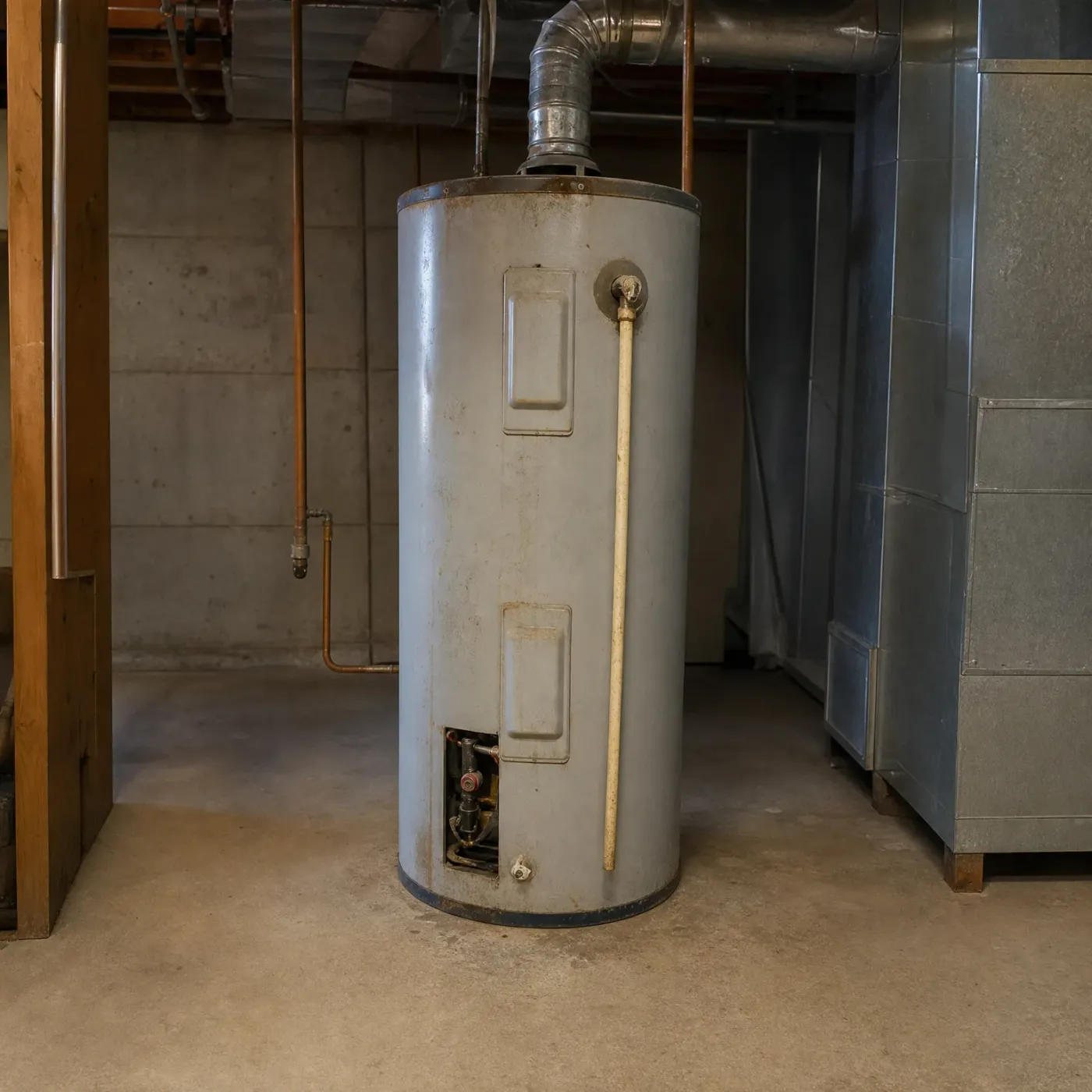
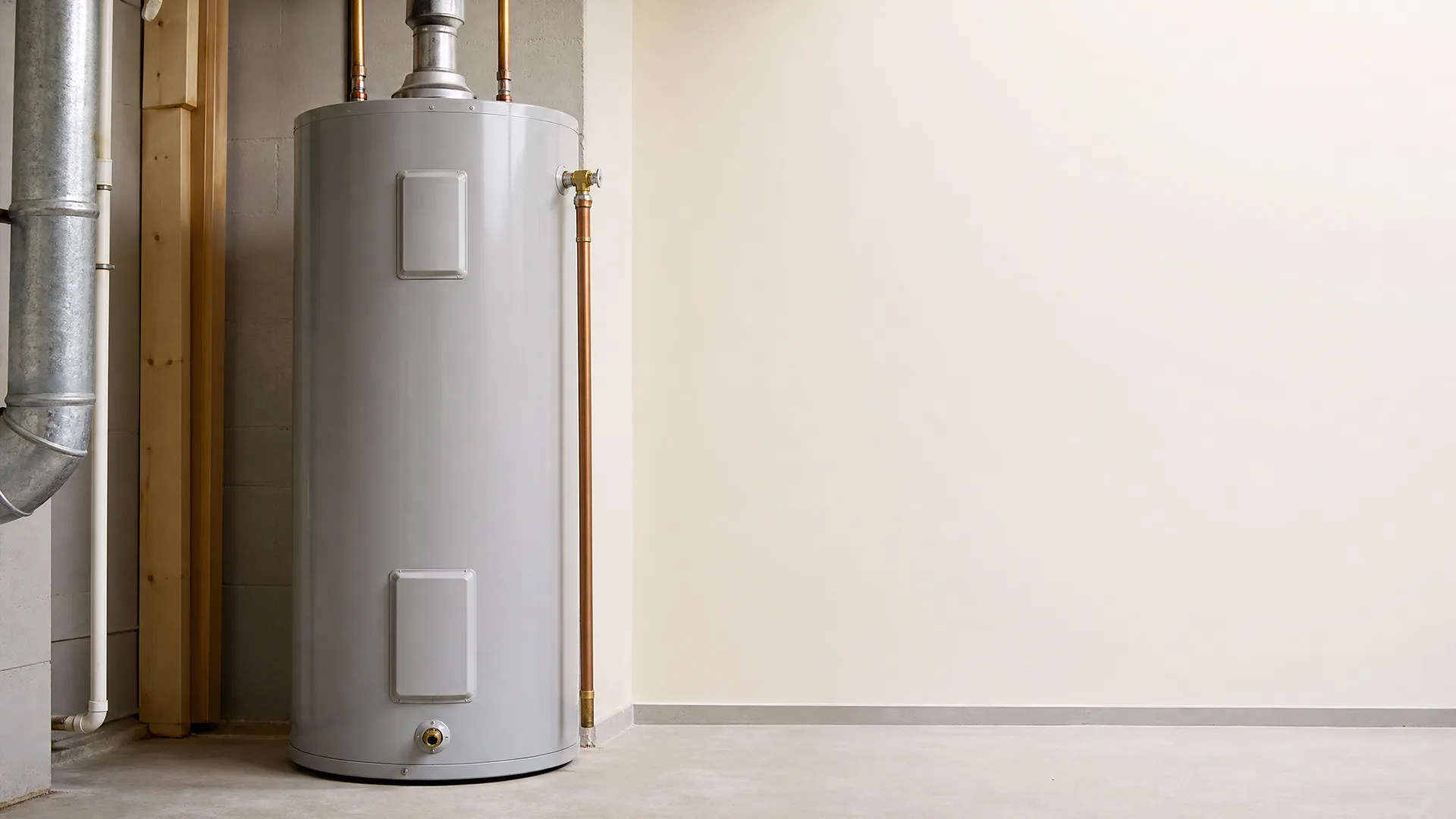
A gray cylindrical water heater with copper pipes stands in a basement corner beside a metal duct and wood framing, next to a plain beige wall and concrete floor.

What shortens a tank's life

Utah's water runs hard, and the minerals in it settle to the bottom of the tank as sediment. That layer sits between the burner and the water, so the burner has to work harder to heat the same gallon. Over years that extra heat stresses the tank's lining and the seams around the fittings. A tank that gets flushed once a year holds up better than one that never does, since the sediment never gets the chance to build into a solid layer.

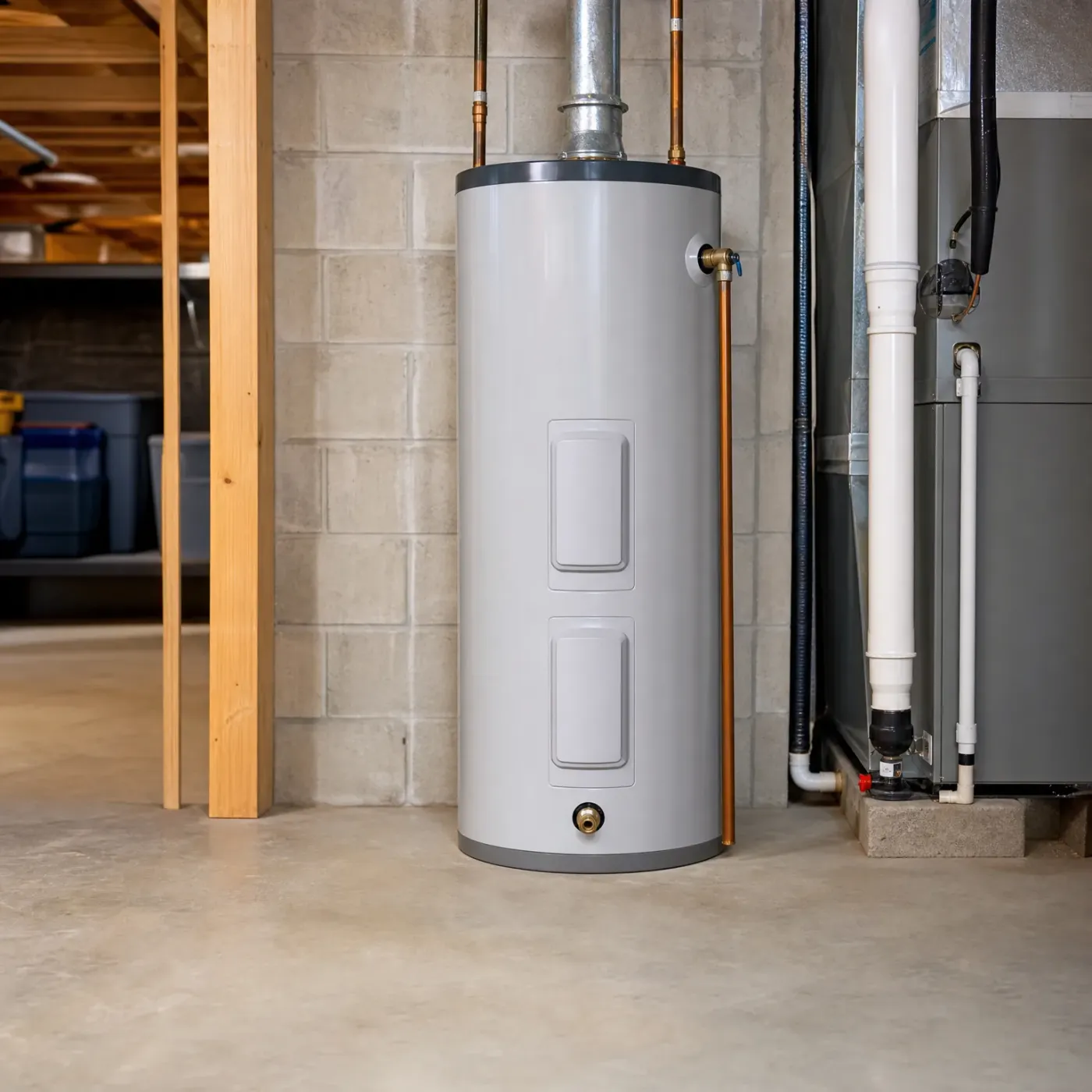
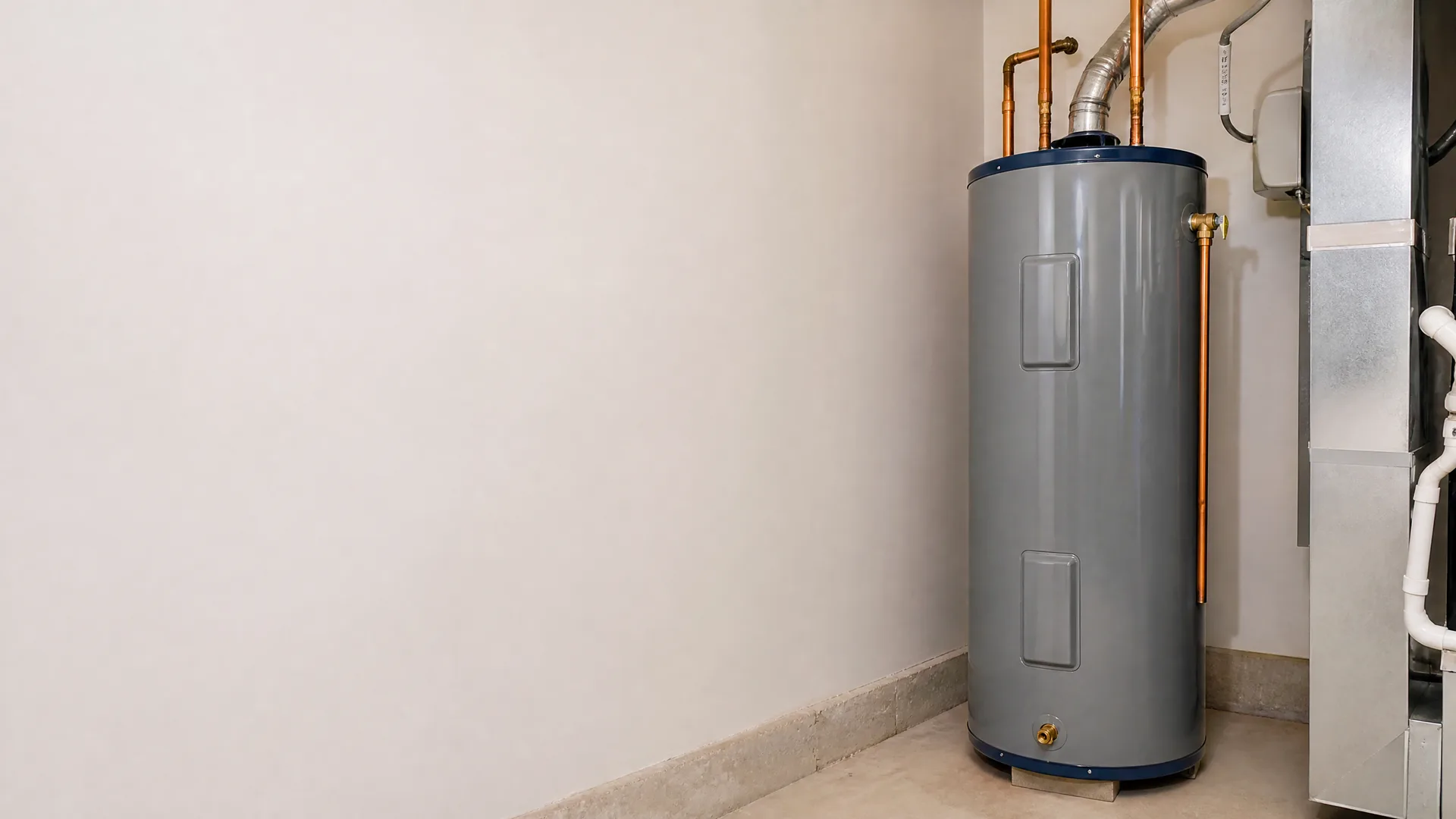
A gray cylindrical water heater with copper pipes stands in a corner of a basement utility room beside metal ductwork and white PVC piping.

Signs the tank is near the end

Rust-colored water, a tank that ticks or rumbles when it heats, or water that won't get as hot as it used to all point to a tank nearing the end of its run. The anode rod inside is what keeps the tank itself from rusting, and once it's used up, the steel is next. Gas water heaters in Utah homes typically last eight to twelve years. If yours is in that range and showing any of these signs, it's worth having someone look before it fails outright.

Is your water heater trying to tell you something?

A tank nearing the end usually says so before it quits. Listen for a rumbling or popping sound when it fires, that's sediment shifting around at the bottom. Water that takes longer to turn hot, or runs lukewarm and never quite gets there, points the same direction. Check the floor around the base for dampness or a rust-colored stain, and look at the fittings on top for any crust or moisture. A tank that's starting to rust from the inside can let go without much warning, and a full tank of water on the floor of a utility closet or garage is not a small cleanup. None of these signs mean you need a new one tomorrow, but they're worth paying attention to.

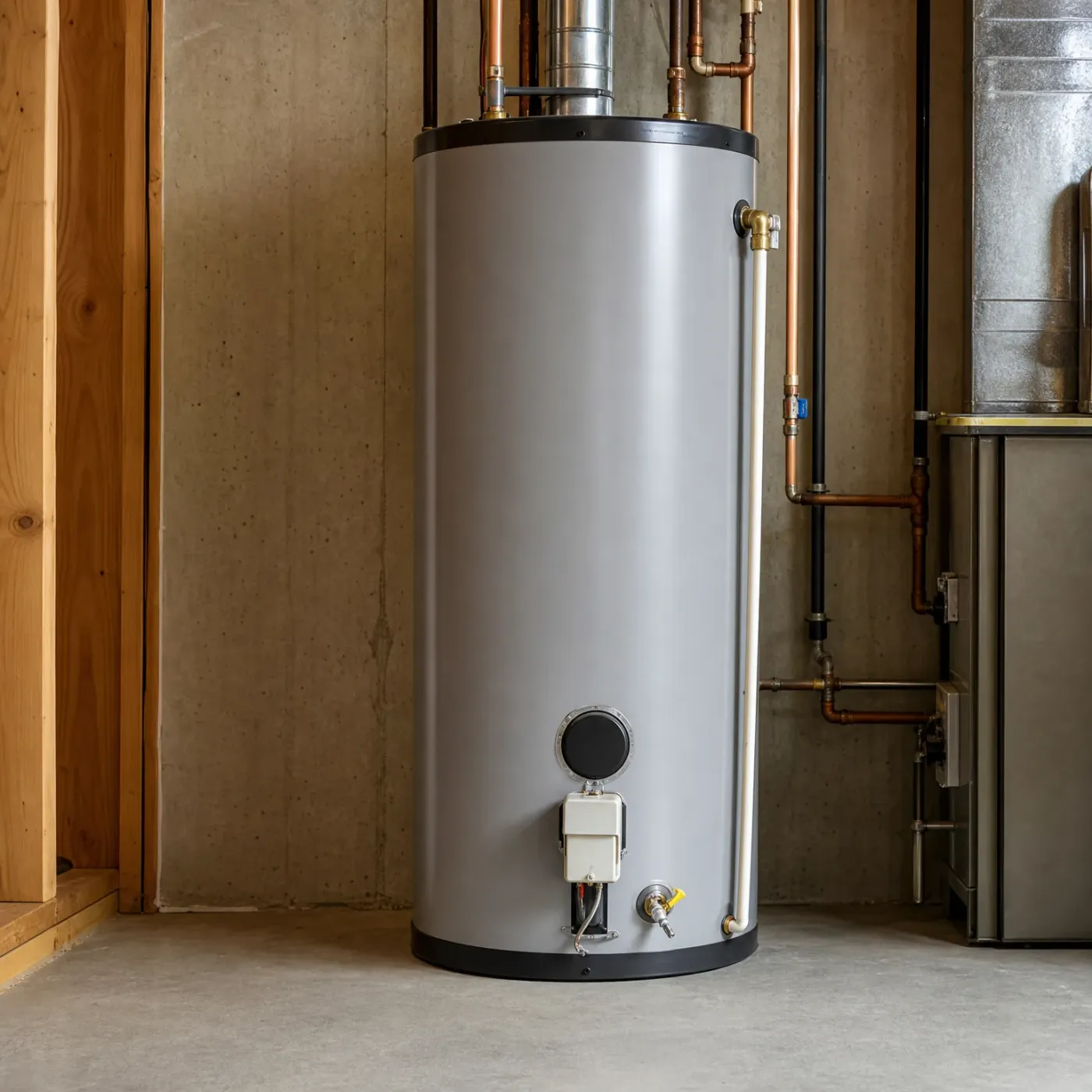
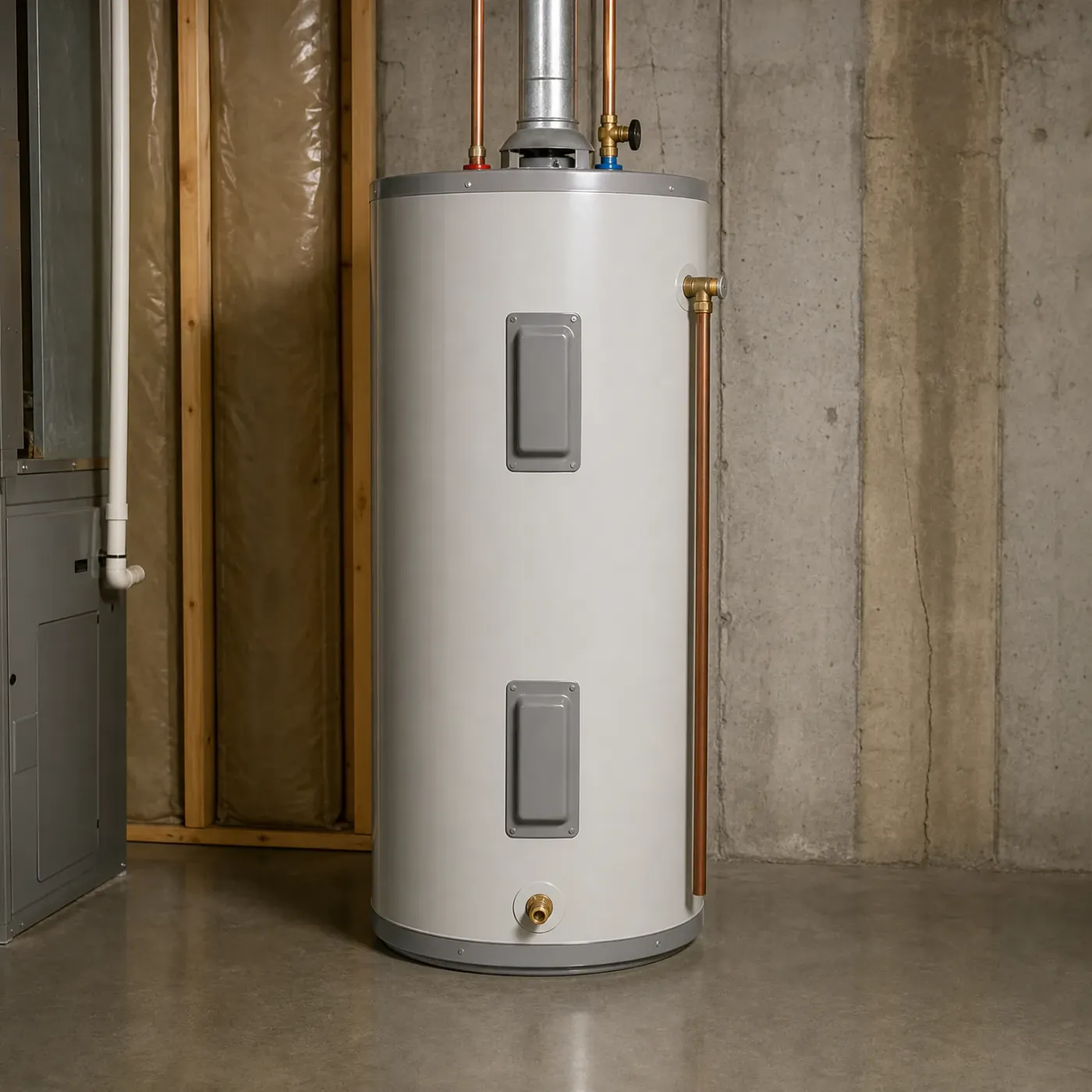
A white cylindrical water heater with two access panels, copper supply pipes and a metal flue, standing on a concrete floor against a concrete wall beside insulated wood framing and a gray electrical panel.

Still doing its job

This is what a water heater looks like when it's running the way it should. The panels sit flat, the pipes are clean, and there's no rust creeping across the tank. If yours looks like this, sediment and age haven't caught up to it yet.
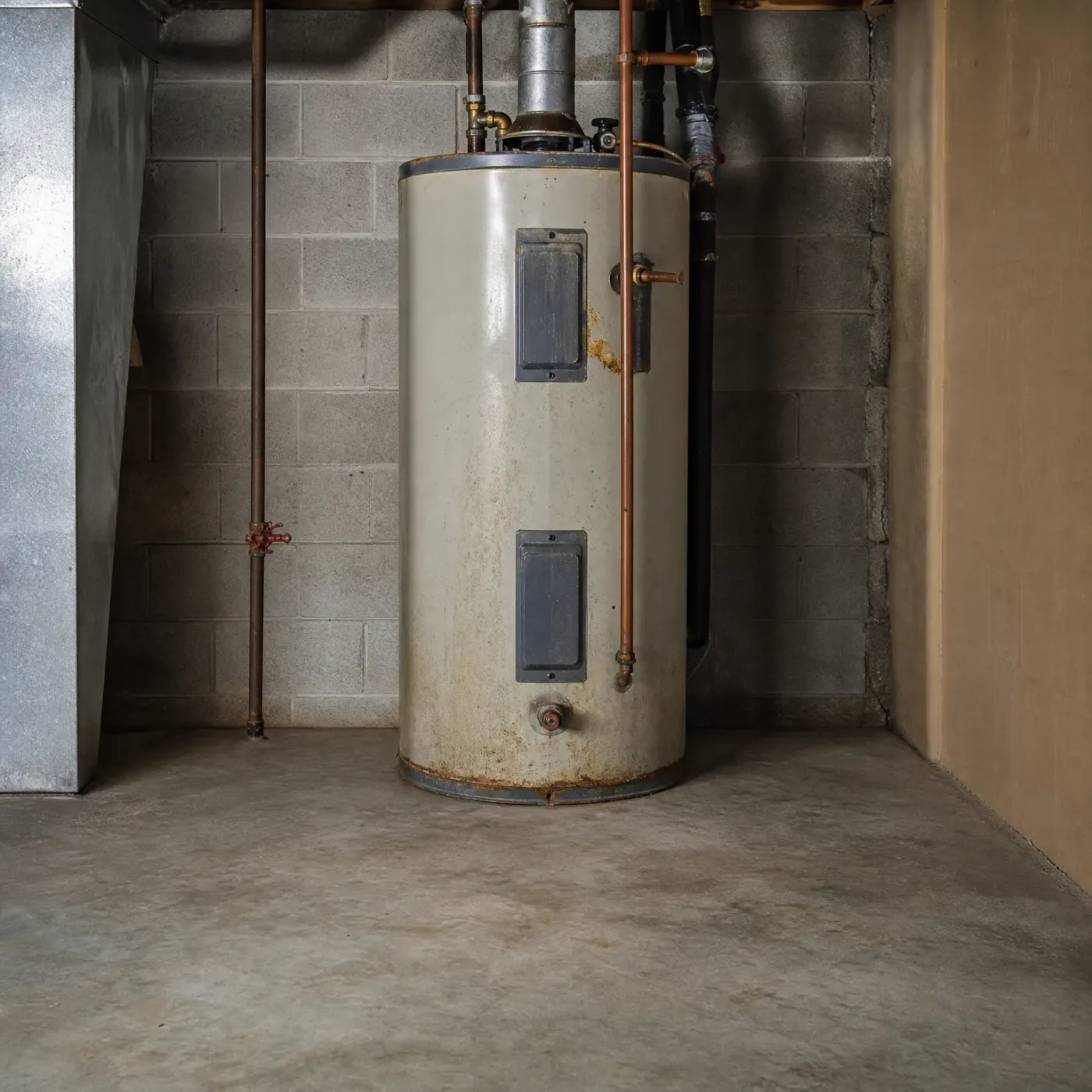

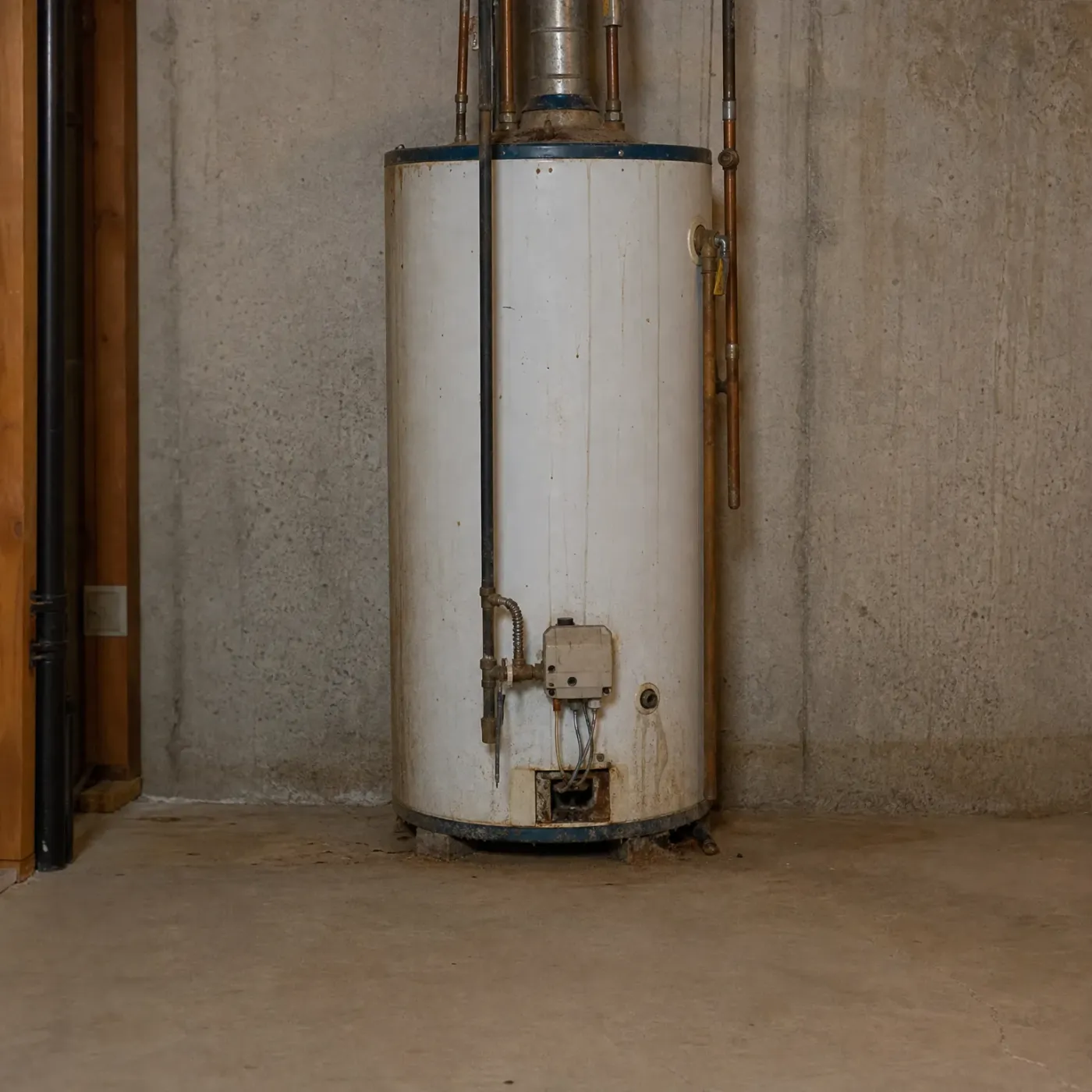
An aging cream-colored water heater with rust streaks and two access panels stands on a concrete floor against a concrete block basement wall, with copper and black pipes running up to the ceiling and a metal duct at left.

Running on borrowed time

Rust like this on the tank itself, not just the fittings, means the metal is breaking down from the inside out. Once it shows on the outside, the inside has had it worse for longer. A tank in this shape can fail without much warning.

A gray-haired, bearded man in a dark coat dusted with snow stands smiling in a dimly lit room with a lamp, mirror, framed art, and a sofa in the background.
An older man with white hair and a beard, wearing a dark snow-dusted coat and scarf, stands in a warmly lit interior hallway with a framed landscape picture, a table lamp and a potted plant behind him, and a snowy view through a window at left.
An older man in a dark snow-flecked overcoat and scarf stands smiling in a warmly lit home entryway, with a glass-paned door showing darkness outside and a lamp-lit room visible through a doorway behind him.
An older man with gray hair and a beard, wearing a dark snow-dusted jacket and scarf, stands smiling in a warmly lit interior hallway with a lit table lamp, a vase of dried branches, and a framed picture in the background.

Get your water heater to the right pro

One request ends the search for a water heater installer.

It costs nothing to send, and you don't have to hire anyone.

The anode rod does the dying

  • Gas water heaters have a thermocouple or igniter that proves flame before gas keeps flowing to the burner.
  • The anode rod inside the tank corrodes on purpose so the steel tank doesn't have to.
  • Once that rod is used up, rust starts working on the tank itself instead of the rod.
  • Hard water in Utah speeds up anode wear, so the rod can run out well before the tank's rated life is up.
  • A leak at the tank seam or bottom means the steel has already failed and the unit needs replacing, not patching.
  • Flushing the tank doesn't restore a worn anode rod, it only clears loose sediment off the bottom.

Every tank water heater has a sacrificial anode rod running down the middle, usually magnesium or aluminum wrapped around a steel wire. It corrodes instead of the tank. That's the whole design. Gas models also carry a thermocouple or igniter that checks for a flame before letting gas keep flowing to the burner, a safety step that has nothing to do with the tank's lifespan but a lot to do with whether the burner lights at all.

The rod wears down over years of doing its job, and Utah's hard water speeds that up. More minerals in the water means more corrosion for the rod to absorb, so a rod that might last a decade elsewhere can run out sooner here. Once it's gone, there's nothing left standing between the water and the steel tank wall. Rust takes over from there, working from the inside out, and no amount of flushing brings a spent rod back. Flushing only clears sediment sitting on the bottom. It doesn't touch what's happening to the rod or the tank wall.

That's why a leak at the seam or along the bottom of the tank means something different than a leak at a fitting or valve. A fitting can be tightened or swapped. A leak from the tank itself means the steel has already given way, and at that point the unit is done. Replacement is the only path forward, not repair.

An older gray gas water heater with a metal flue pipe stands on a concrete basement floor beside ductwork and exposed copper piping.
Before you get your water heater installation
A gray cylindrical water heater with copper pipes stands against a concrete block wall in a basement, next to white PVC piping and a gray furnace, with wood framing and storage bins at left.
After you get your water heater installation

Tank versus tankless lifespan

A standard tank water heater in Utah lasts 8 to 12 years. A tankless unit can run 20 years or more, since there's no tank sitting full of hard water sediment waiting to corrode. That difference alone is why some homeowners switch when the time comes to replace. Tankless costs more upfront and the installation is more involved, since it may need a new gas line or venting setup. A tank is simpler to install and replace, and it's still the more common choice in Utah homes. Neither option skips maintenance. A tankless unit needs its heat exchanger flushed on a schedule or the same minerals that kill a tank will choke its lines instead.

Replacing versus repairing

A repair makes sense if the tank is a few years old and the problem is one part, like a thermocouple or a heating element. Once the tank itself is rusting or leaking, no part replaces that. Repairing an old unit buys a little time but doesn't change how many years are left in the tank. Replacing it resets the clock and gets you a unit built for Utah's water from the start, with a sacrificial anode rod doing the job of protecting a fresh tank. If your water heater is past 8 years and already needed a repair once, installation is worth looking into before the next failure happens on its own schedule, not yours.

78.7% of homes statewide heat with gas

Most houses around you run a gas water heater, not an electric one. Gas burners heat the tank from underneath, so sediment settling on the bottom sits right where the heat hits hardest. That's the spot where a gas tank's life actually gets decided.

ACS 2020-2024 5-year B25040

A gray cylindrical water heater stands on a concrete floor against a concrete wall, with copper and black pipes running overhead and a metal duct and dark equipment cabinet to the right.
A tank like this has flat, rust-free panels and clean fittings, the sign that sediment hasn't gotten ahead of it yet.
An old white gas water heater with rust stains, copper pipes and a flue stands in the corner of a concrete-walled room with a bare concrete floor and a wooden door frame at left.
Rust at the flue and corrosion creeping down the tank mean the steel is losing to what's inside it.
A woman wrapped in a cream textured blanket sits in an armchair beside a lit lamp and a dark window, with an open book in the foreground.
A bearded man in a plaid flannel shirt stands indoors looking out a frost-covered window, with a steaming dark blue mug on the wooden sill and snow-covered trees outside.

A gas water heater in Utah lasts 8 to 12 years if sediment never gets ahead of it, longer if you went tankless. The hard water here doesn't give any tank a pass, so the real question isn't the age on the label, it's what the tank sounds like and looks like right now. Rumbling, rusty fittings, water that won't get hot the way it used to, those tell you more than a date ever will. If what you've read here matches what's happening at your place, the decision is already half made. The part that used to take the most time, tracking down someone licensed to look at it or replace it, isn't yours to carry. Send the form and a contractor who handles this work in Utah takes it from there. You go back to your day, and the next call you get is about your water heater, not about finding someone to ask.

A wooden front door with six small glass panes and a narrow sidelight, set in a shingled house entry with white trim, reached by stone steps flanked by a planted urn with purple flowers and leafy branches in the foreground.
Exterior corner of a house with beige horizontal lap siding and a black-framed window, with white hydrangeas, ornamental grasses and low plantings along a flagstone patio.
Corner of a house with tan lap siding and a window, a brick step edge, flowering white hydrangeas and green shrubs beside a flagstone walkway leading to a white picket fence and a tree in backlit sunlight.
House exterior with cream horizontal lap siding, a dark-framed window, a black wall lantern beside a wood door, potted shrubs on stone steps, and white and pink hydrangeas in the foreground garden.
Corner of a cream lap-sided house with a white-framed window and dark shingled roof, beside a white-flowering hydrangea shrub, a clipped hedge, mulched bed and lawn.

The right pro for this job

Send the form and the search for an installer is over.

Match me with a pro

No charge to send it. You decide if you hire them.