

Flushed on schedule
A tank that gets drained once a year stays clear at the bottom. The fittings stay sound, the relief valve stays free to do its job, and the heater keeps recovering hot water at the rate it was built for.
Answer a few questions instead of calling shop after shop.
Skip the callsOnce a year is the right schedule for most water heaters in Utah. Hard water is common along the Wasatch Front and in much of the state, and that means minerals settle out as sediment on the bottom of the tank. Most homes here run gas water heaters, and when sediment builds up over that burner, the tank has to work harder to heat the same amount of water, and the metal underneath it heats unevenly. Left for a few years, that sediment layer turns into a hard crust that no longer flushes out easily and can shorten the tank's life. A yearly flush clears it before it sets up, keeps the burner heating water instead of a layer of mineral deposit, and gives a straightforward look at the tank, the valve and the fittings while someone's already there.
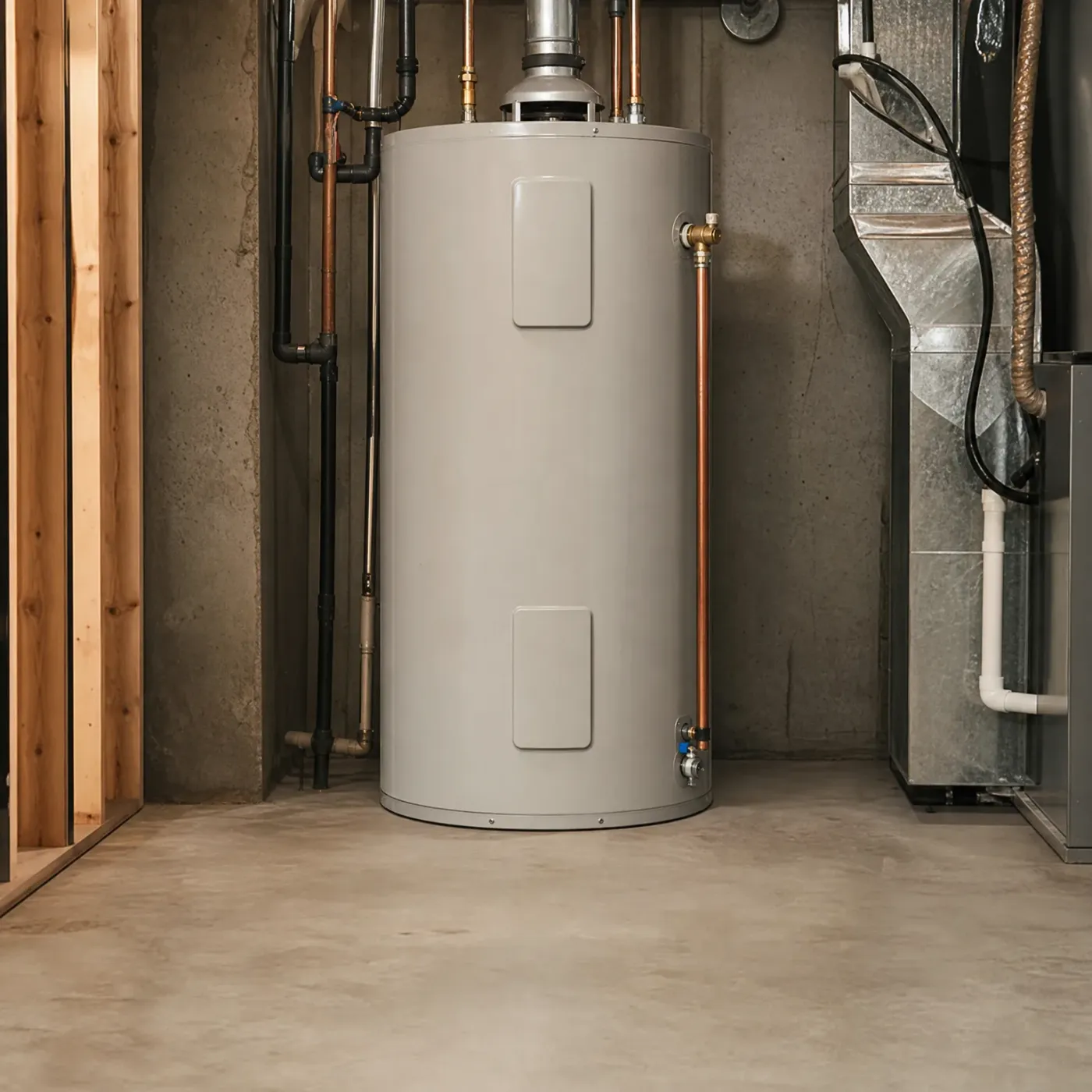
A tank that gets drained once a year stays clear at the bottom. The fittings stay sound, the relief valve stays free to do its job, and the heater keeps recovering hot water at the rate it was built for.
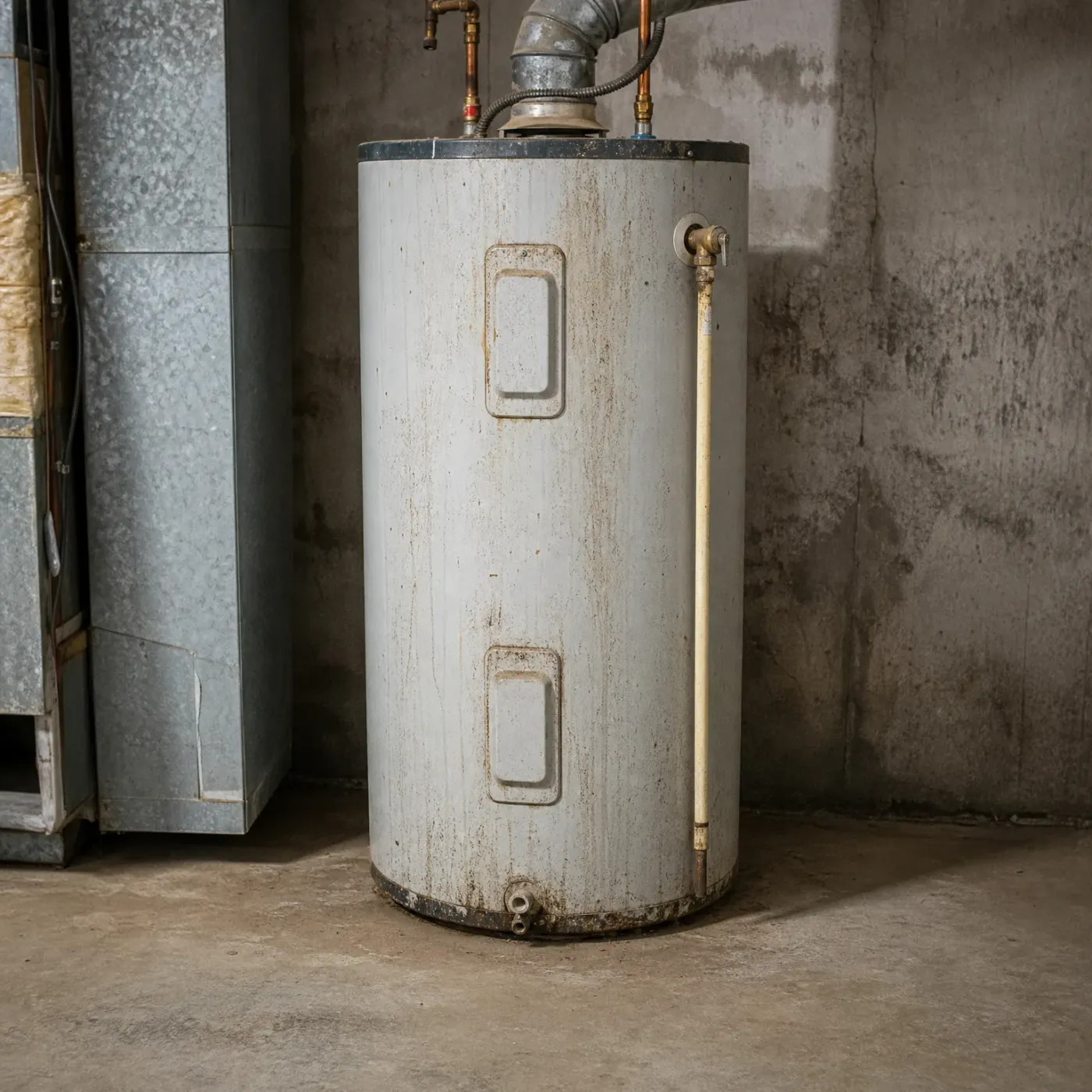
Sediment hardens against the steel and holds moisture against it. Rust follows, then pitting, then a tank that weeps at a seam. By the time it looks like this, flushing won't bring it back.

Hard water along the Wasatch Front leaves sediment behind every time the tank heats a new batch of water. Over a year that layer thickens on the bottom. You'll hear it before you see it, a popping or rumbling sound as the burner fires under a layer of grit instead of clean metal. Your gas bill reflects it too, since the burner has to run longer to heat water through that buildup. Some homeowners notice the hot water runs out faster than it used to, which is the tank losing capacity to sediment rather than the heater failing.
If you're not sure when yours was last flushed, that's reason enough to get it looked at rather than guess and let it go another year. Finding someone for a job this small usually means calling around, explaining the same thing to three different companies, and sorting through quotes for a service that shouldn't take much deciding. A plumber who works on water heaters across Utah every week already knows what hard water does to a tank on this schedule and can flush it as part of one visit.


Hot water rises, so the burner sits under the coldest part of the tank, right where the incoming water lands. That is also where hard water drops its minerals as the tank heats each new batch. Gas water heaters draw heat up through that same spot, so a layer of sediment there does the most damage, slowing recovery and putting the burner through more work to push heat past it. Flushing clears that layer before it builds into a crust.

Draining the tank is also the one time a year someone has eyes on the drain valve, the relief valve and the fittings up top. A valve that is starting to seize or a relief valve that will not reset shows up during a flush, not during a shower at six in the morning. A local contractor who flushes tanks all year in this water knows what a Utah tank's sediment usually looks like after twelve months, and what it looks like when it has gone two or three years past due.
Odds are your water heater runs on gas, like most in Utah. That gas burner sits under the tank, right beneath the layer where sediment collects first. A yearly flush keeps that burner heating water instead of heating through a crust of minerals.
ACS 2020-2024 5-year B25040




Finding someone to do this isn't the hard part, it's the part that eats an afternoon. Calling a few plumbers, explaining the same thing about your tank each time, waiting on quotes, trying to guess which one actually flushes tanks regularly instead of just listing it on a website. A request here goes to one licensed plumber local to your part of Utah, someone who deals with this sediment problem every week because the water here calls for it, not five companies racing to call you back first. They already know what a year of hard water does to the bottom of a tank and what to check once they're in there. You still have to let someone into your house and give them the time to do the work. But you don't have to spend your evening finding out who that should be.
A water heater in Utah needs a flush once a year. That's the whole answer. Hard water along the Wasatch Front and through most of the state leaves sediment behind every time the tank heats a new batch of water, and a year is about how long it takes that layer to go from harmless to a problem. Flushed on that schedule, the tank stays clear at the bottom, the fittings hold up, and the relief valve stays free to do its job. Left longer, the sediment thickens into a crust that sits between the burner and the water above it, and the gas burner most homes here rely on ends up heating through that crust instead of the tank. You'll notice before you see a drop in hot water. It shows up as popping or rumbling from the tank, the sound of water working its way through sediment instead of moving freely. None of this changes with the age of the house or how the system came with it. What changes is whether the flush happens on time. A tank that gets drained every year keeps working the way it was built to, for as long as it's in service. A tank that doesn't falls behind a little more each year, and nothing about Utah's water gets easier on it. The schedule is simple because the water here doesn't give you a reason to make it complicated.


Describe it once
Your request stays with one local pro.
