Tell us about the job
Takes about a minute. No obligation.
Gas-fired water heater installation in Cache County starts with the vent run and combustion air path, because getting either wrong on a gas unit creates a safety problem the new tank cannot fix itself. Utility gas heats more occupied homes in Cache County, Utah than any other fuel, at 80.9% (2020-2024 ACS 5-year). A contractor quoting a replacement here will assess the existing flue, its diameter, its termination point, and whether the space around the unit draws enough fresh air to support clean combustion. If a home has been resealed or the mechanical room tightened since the original install, the combustion air calculation changes, and the unit size or venting method the contractor specifies changes with it.
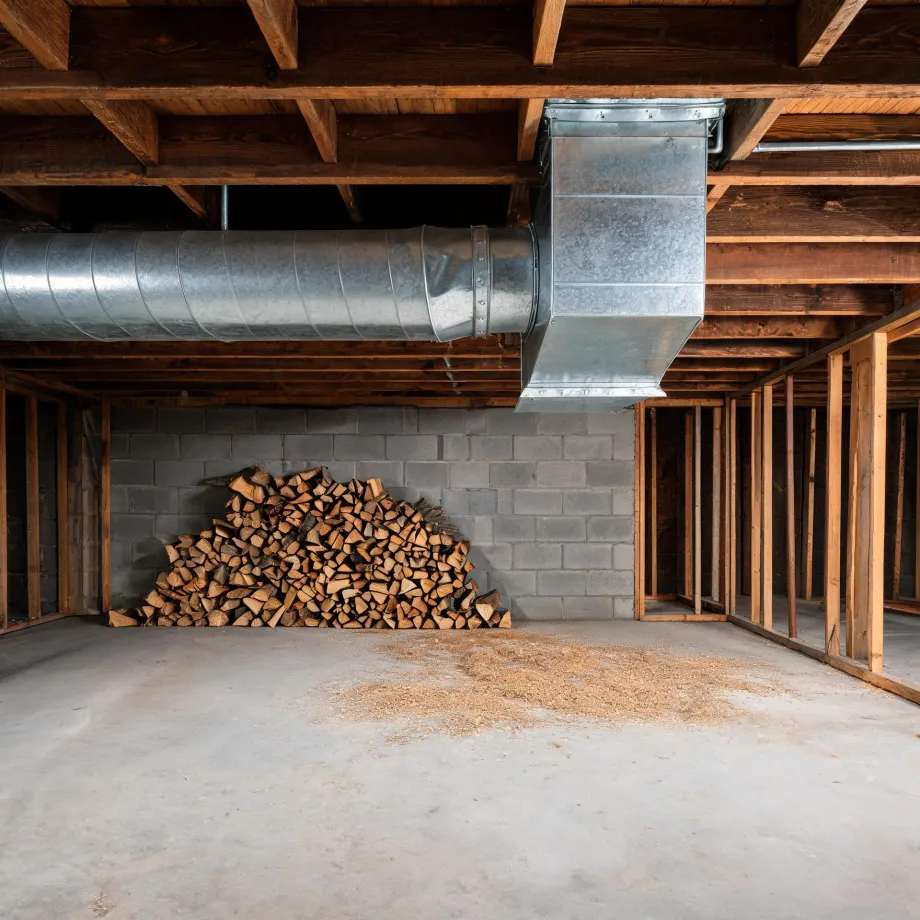
Ductwork routed for older venting arrangements is what a water heater contractor runs into in a significant portion of Cache County homes. Half the homes in Cache County, Utah were built in 1992 or earlier (2020-2024 ACS 5-year). That means the flue path, the clearances, and sometimes the chase itself were built around equipment with different exhaust requirements than what a new unit calls for. Whether the existing runs can serve a new installation without modification is the question that shapes the quote, and it gets answered by measuring what is there, not by reading the permit date.
What a Water Heater Installation Covers
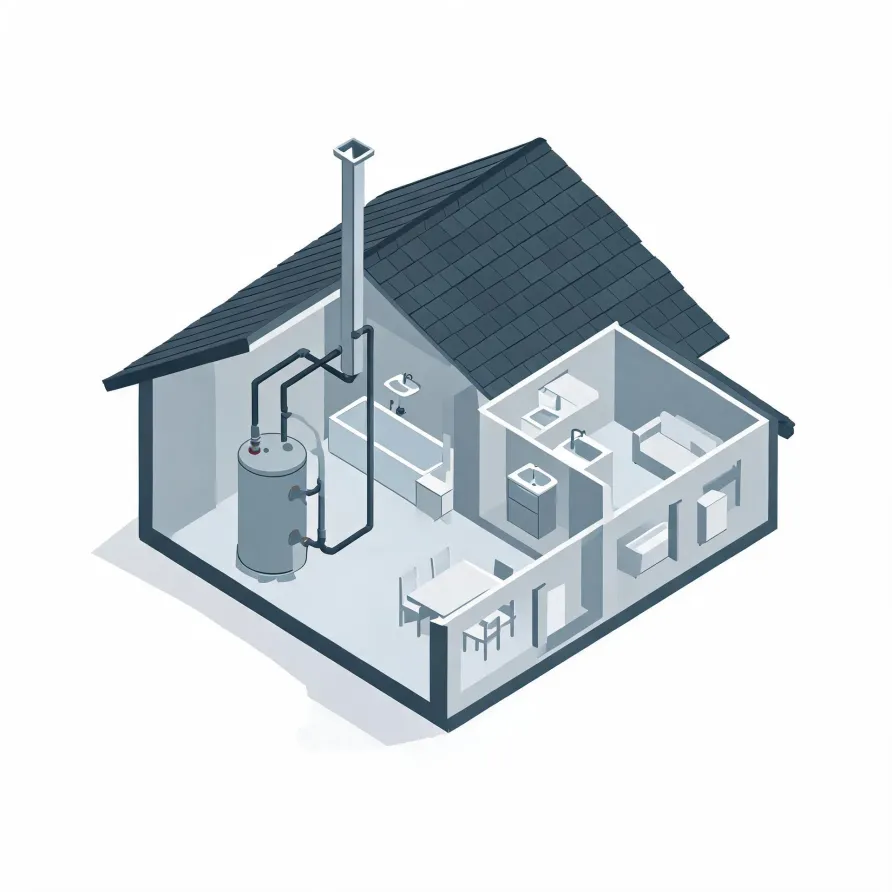
The tank is the piece a homeowner sees first, sitting in a utility closet, basement, or garage. It holds and heats a supply of water ready for the taps and appliances throughout the house. A contractor also installs the pressure relief valve on the tank's side, which releases if pressure or temperature inside climbs too high.
Cold water enters the tank through a dip tube that runs down to the bottom, and hot water exits from a separate port at the top and travels out through the supply lines already in the walls. The anode rod hangs inside the tank to slow corrosion, and the drain valve sits near the base.
The drawing shows a typical layout, and a licensed contractor determines exactly what applies to your home and its existing plumbing and venting.
Get matched in Cache CountyCache County, by the numbers
103 severe weather events were recorded in Cache County, Utah between 2015 and 2024.
NOAA National Centers for Environmental Information, Storm Events Database, bulk CSV export, events 2015-01-01 through 2024-12-31.Half the homes in Cache County, Utah were built in 1992 or earlier (2020-2024 ACS 5-year).
U.S. Census Bureau, 2020-2024 American Community Survey 5-Year EstimatesCache County, Utah holds 46,665 housing units (2020-2024 ACS 5-year).
U.S. Census Bureau, 2020-2024 American Community Survey 5-Year EstimatesOwners occupy 63.7% of the occupied homes in Cache County, Utah (2020-2024 ACS 5-year).
U.S. Census Bureau, 2020-2024 American Community Survey 5-Year EstimatesCodes & Standards Governing Water Heater Installation in Cache County, Utah2 sourced rules and standards
Licensing and Legal Requirements in Cache County, Utah
Utah’s contractor licence does not reach alteration, repair, remodelling or improvement of a building worth less than $7,000 in labour and materials together, counting every change and addition to the agreed work — though the plumbing and electrical trades are pulled back under licensure even below that figure.
Utah requires a state licence before engaging in a licensed construction trade or contracting activity, and HVAC contractor is one of the licence classifications the state issues.
Weather Events in Cache County That Put Demand on Water Heaters
Severe weather puts stress on water heating systems. Knowing what this area actually sees year to year helps a contractor size and install equipment that holds up to local conditions.
103 severe weather events, 2015–2024. Source: NOAA National Centers for Environmental Information, Storm Events Database.