Tell us about the job
Takes about a minute. No obligation.
Gas combustion puts specific wear on a water heater that electric resistance never does: the flue, the thermocouple, the burner orifice, and the draft diverter all carry the history of every firing cycle the unit has run. Utility gas heats more occupied homes in Sanpete County, Utah than any other fuel, at 76.9% (2020-2024 ACS 5-year). A contractor diagnosing a failed or underperforming unit here checks the venting path first, because blocked or corroded flue components are what cause incomplete combustion, nuisance shutdowns, and carbon monoxide risk in gas-fired equipment. Sediment in the tank and a weakened anode rod come next. Those are the components a gas water heater in this county actually wears out.
Water heaters in housing this old are often running on components that were sourced and sized for product lines no longer in production. When a contractor opens the unit, what matters is whether the replacement part that fits it can still be ordered, or whether the repair pivots to a workaround or a full swap. Half the homes in Sanpete County, Utah were built in 1985 or earlier (2020-2024 ACS 5-year). That depth of stock means a repair call here is as much a parts-availability question as a mechanical one.
The Parts of a Water Heater a Contractor Checks First
The tank is the piece a homeowner notices first, usually standing in a utility closet, basement, or garage. It holds and heats the water the house draws on. When sediment builds along the bottom or the tank itself corrodes, the contractor starts here, because those conditions affect everything downstream.
The pressure relief valve sits on the side of the tank and releases pressure if it climbs too high. The anode rod runs inside the tank and slows corrosion. The dip tube, the drain valve, and the supply connections each have a role a contractor checks when tracing a symptom back to its source.
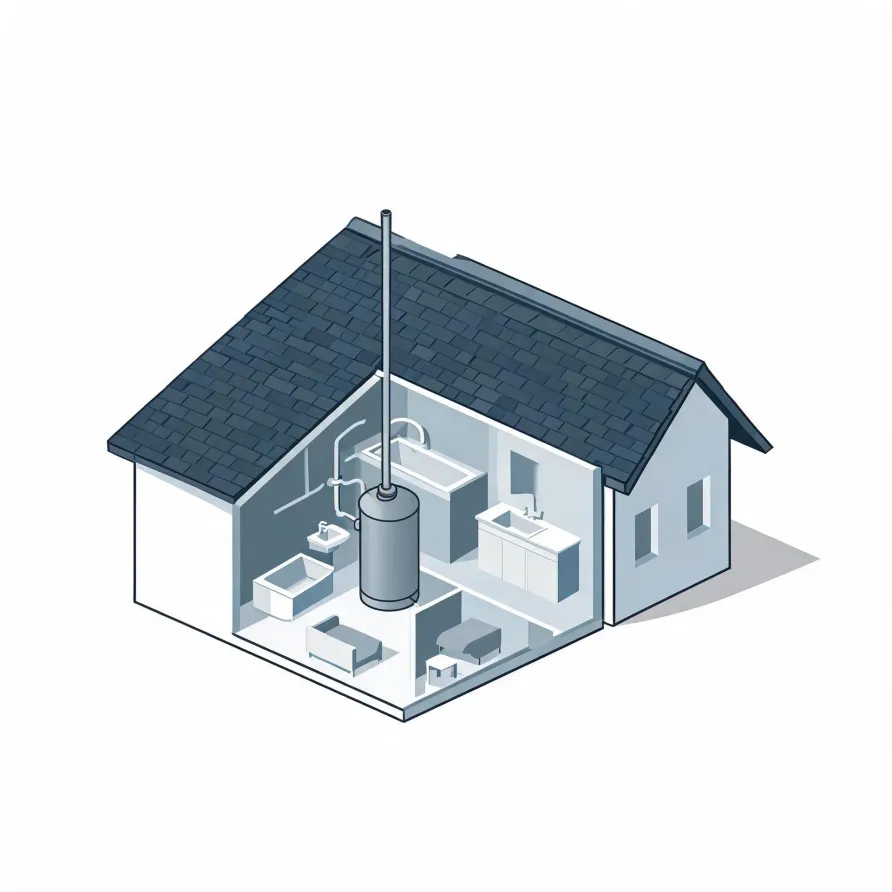
The drawing shows the general layout of a water heater system, and a licensed contractor determines which parts apply to the specific unit and setup in your home.
Get matched in Sanpete CountySanpete County by the Numbers
62 severe weather events were recorded in Sanpete County, Utah between 2015 and 2024.
NOAA National Centers for Environmental Information, Storm Events Database, bulk CSV export, events 2015-01-01 through 2024-12-31.Half the homes in Sanpete County, Utah were built in 1985 or earlier (2020-2024 ACS 5-year).
U.S. Census Bureau, 2020-2024 American Community Survey 5-Year EstimatesSanpete County, Utah holds 10,578 housing units (2020-2024 ACS 5-year).
U.S. Census Bureau, 2020-2024 American Community Survey 5-Year EstimatesOwners occupy 74.3% of the occupied homes in Sanpete County, Utah (2020-2024 ACS 5-year).
U.S. Census Bureau, 2020-2024 American Community Survey 5-Year EstimatesCodes & Standards Governing Water Heater Repair in Sanpete County, Utah2 sourced rules and standards
Licensing Rules for HVAC Repair in Sanpete County, Utah
Utah’s contractor licence does not reach alteration, repair, remodelling or improvement of a building worth less than $7,000 in labour and materials together, counting every change and addition to the agreed work — though the plumbing and electrical trades are pulled back under licensure even below that figure.
Utah requires a state licence before engaging in a licensed construction trade or contracting activity, and HVAC contractor is one of the licence classifications the state issues.
Severe Weather Events in Sanpete County
Extreme weather puts real strain on water heaters, forcing them to work harder and fail sooner. How much of that strain a unit sees depends on where it sits, which makes local weather history a practical part of understanding repair demand in Sanpete County.
62 severe weather events, 2015–2024. Source: NOAA National Centers for Environmental Information, Storm Events Database.