Send the form, and lining up the water heater tune-up stops being yours to chase.
120 degrees is the number most people land on, and it works for most homes in Utah. It holds enough hot water for a shower and a load of laundry without wasting gas keeping a tank hotter than anyone needs. Some households turn it up to 130 if a dishwasher without its own heating element needs it, or down to 110 if there's someone in the house who scalds easily.
Gas water heaters are common here, and the thermostat dial on the tank usually has marked positions rather than exact degrees. If yours is set to "hot" or near the top of the dial, it's probably running well above 120 and you're paying for heat that just sits in the tank.
Setting it is simple enough on your own. Knowing whether your tank is holding that temperature, recovering the way it should, and not losing heat through old insulation or sediment buildup is a different question, and it's one worth having a local contractor look at once.
Finding that person usually takes longer than fixing the problem does. A water heater tech who works in Utah year-round has seen what tends to go wrong with tanks here, the sediment that builds up from the water, the thermocouples that wear out, the pressure valves worth checking before they fail. That's the kind of thing that's hard to know from a dial and easy for someone who does this every week.
Send the request through this page and that search becomes someone else's job instead of yours. One licensed contractor local to Utah gets matched to you, not a handful of companies competing for the call. You get a straight answer about your tank from someone who already knows the equipment, instead of guesswork from a dial that was never labeled in actual degrees to begin with.
What temperature should I set my water heater to in Utah?
You want a number to set the dial to and not think about it again. Maybe the water feels too hot out of the tap, or someone mentioned the tank is wasting gas by running hotter than it needs to. You are not trying to solve a problem, just make sure the setting you have is the right one for a house in Utah and not some default the installer left it on.
120 degrees
120 degrees is the standard setting, and it holds for gas water heaters the way most Utah homes have them. Gas tanks recover fast, so you are not losing hot water by keeping the dial at 120 instead of higher. Water heated past 120 does not do anything extra for you. It sits in the tank losing heat through the walls of the tank, and the gas burner cycles on more often to make up for it. With power here cheap and gas doing the heating, there is no real savings case for running hotter, only a water heater working harder than it needs to.
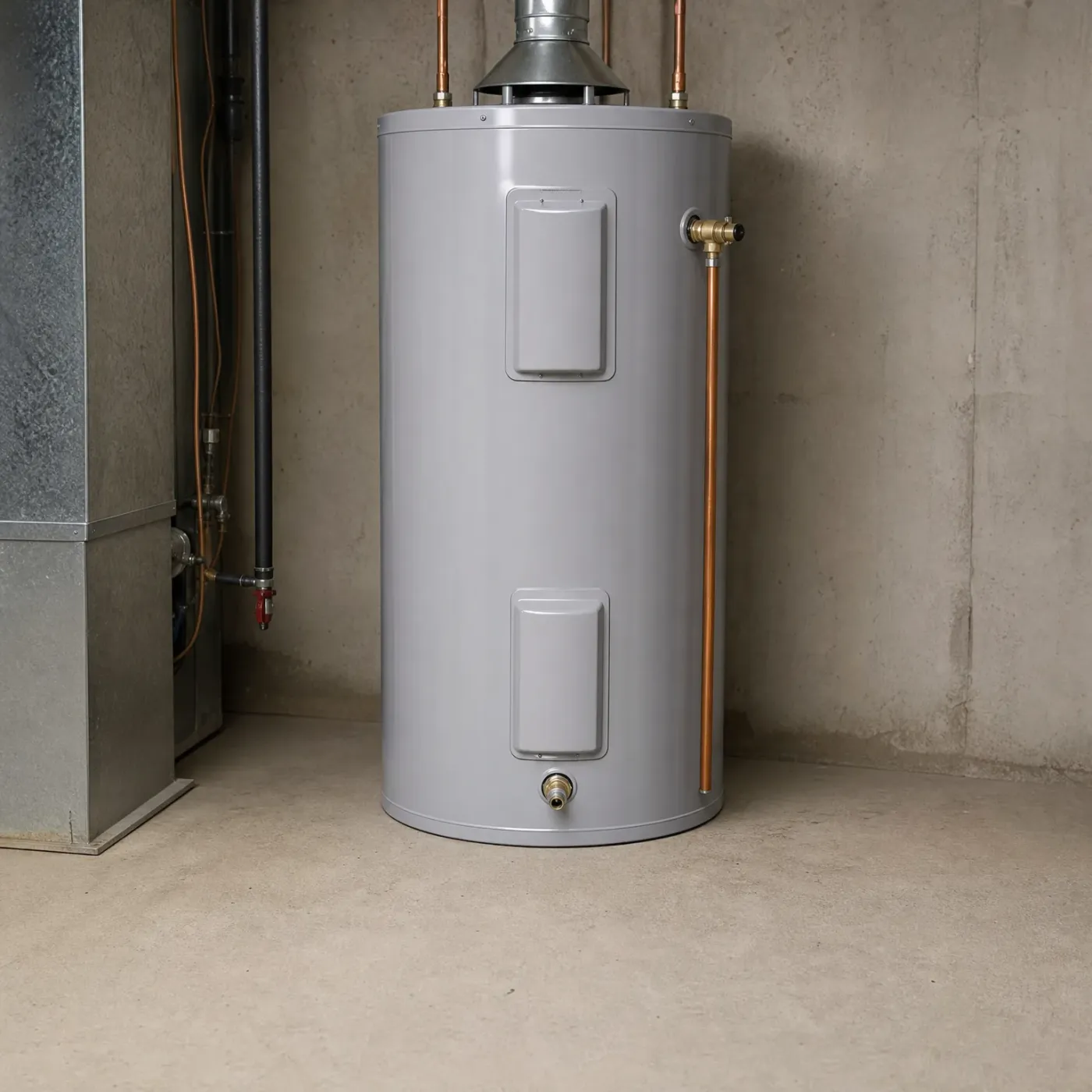
Set and holding steady
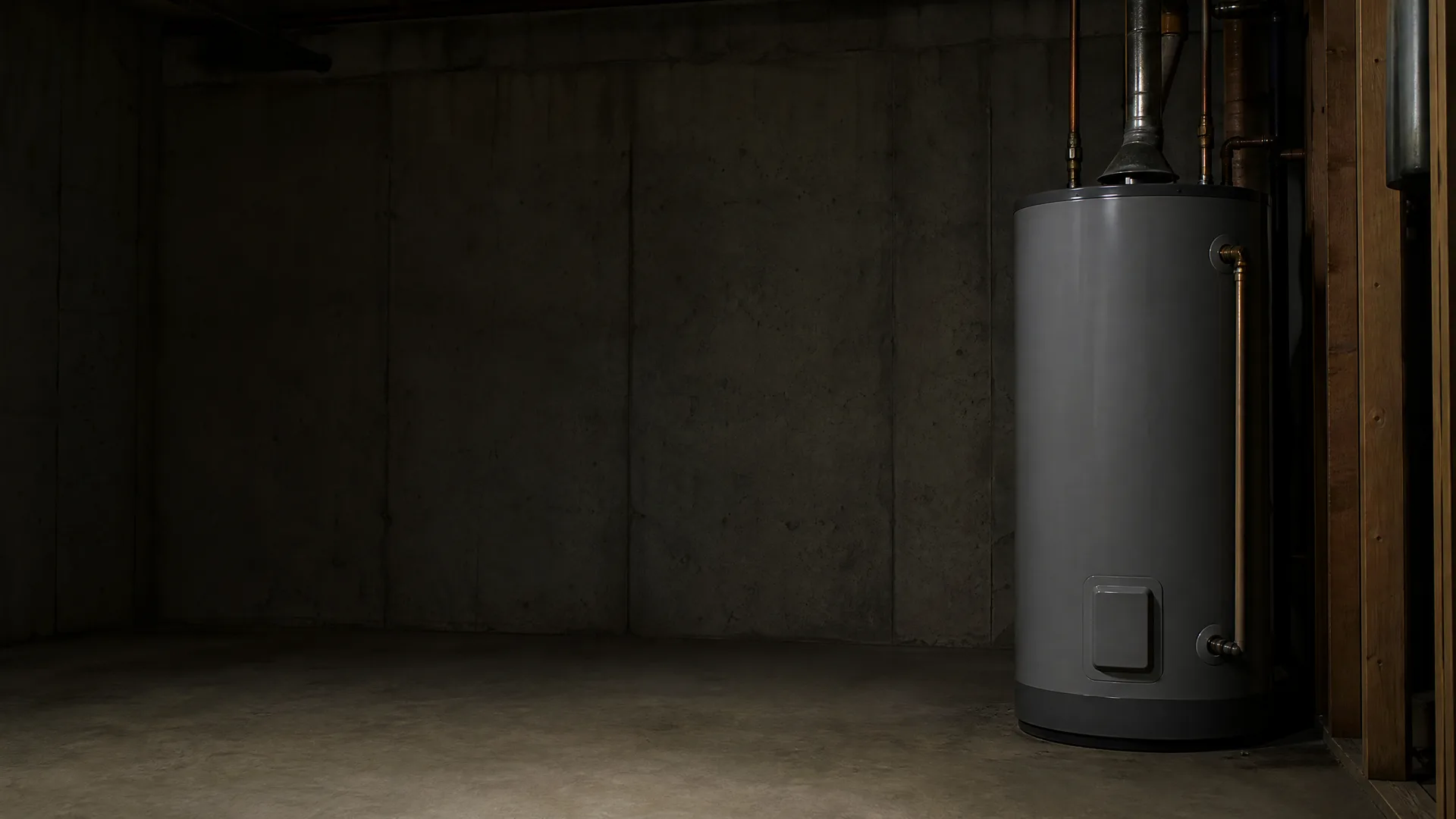
This is what 120 degrees looks like day to day. The tank has two access panels for checking the thermostat and heating element, a drain valve to clear sediment, and a relief valve venting through its copper pipe. Nothing straining, nothing rusting.
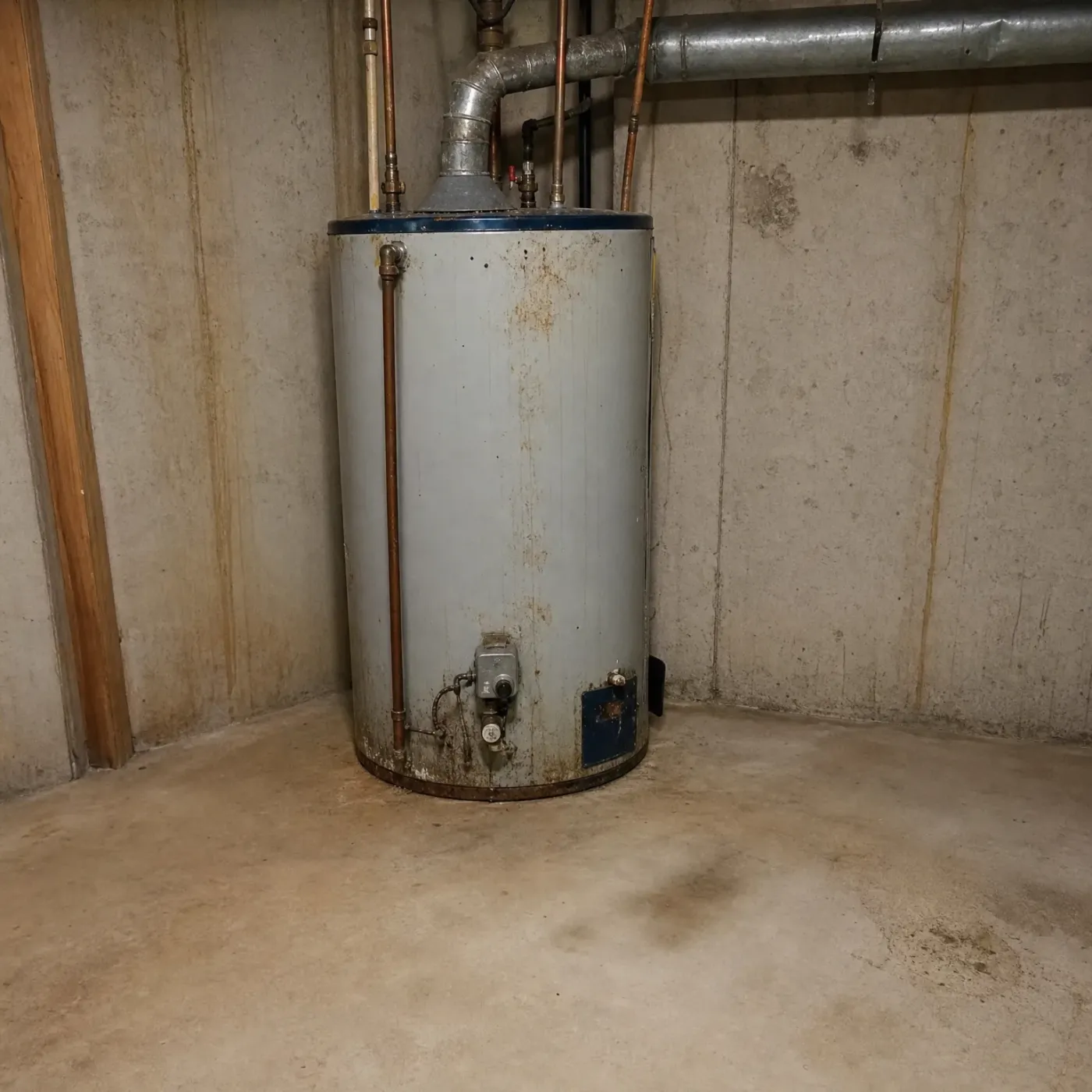
What gets ignored turns into this
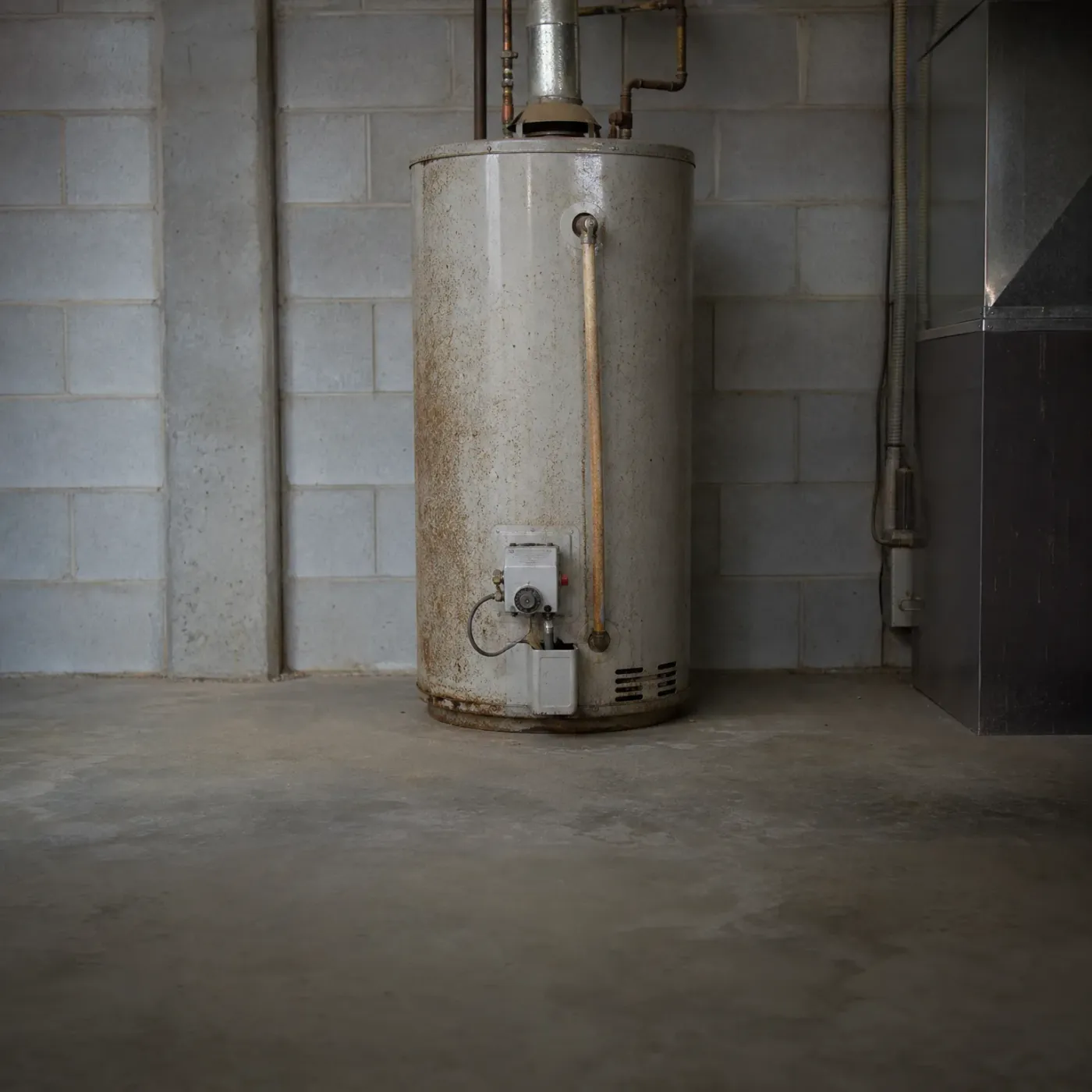
Rust on the tank body and staining on the floor usually start small, near a fitting or the base. Left alone, the tank corrodes from the inside out. A setting that's too high speeds that up, and so does skipping the yearly check.
Is your water heater set too high already?
Water that stings at the tap, or that forces you to run the cold handle just to wash your hands, is a sign the dial is set past 120. You might notice it most in the shower, when a small nudge of the lever sends the temperature up fast. A gas water heater running hotter than it needs to burns more gas every day to hold that temperature, and it puts more wear on the tank over time. If anyone in the house is older, or there are small kids who run their own bathwater, water set too hot is also a scald risk, not just a gas bill one.
A dial stuck at 140 does not fix itself. Sediment builds faster at that heat, and a gas tank working to hold water that hot burns more than it needs to, month after month, with cheap power doing nothing to offset gas use. Checking the thermostat setting against the actual water temperature at the tap takes someone who works on these tanks regularly, since the dial and the real temperature don't always match. A local contractor who services water heaters all year knows which tanks in Utah tend to drift high and what usually causes it, whether that's a failing thermostat or sediment holding heat against the element. One contractor gets your request, so you're not explaining the same thing to five different companies. Send it and the search for someone qualified is off your plate.
A gas tank set at 120 degrees still loses heat through the flue and the tank walls, so the burner cycles on and off all day to hold that number.
Every ten degrees above that adds to how often the burner fires, which is why 120 holds the line between enough hot water and gas spent for no reason.
The thermostat behind the access panel only knows what the water is doing right at the tank. It tells the burner when to fire and when to stop, cycling on and off through the day to hold close to 120 degrees. Cold water comes in through a dip tube that sends it straight to the bottom, so the burner is only reheating what you actually used, not the whole tank over again. That bottom section is also where sediment settles, right where the flame hits hardest, and the hotter the tank runs, the faster that layer hardens and starts blocking heat from getting through. The anode rod down there is doing its own job, wearing away so the steel tank doesn't, and higher heat speeds that wear along with the sediment. The relief valve up top is a separate safety part, set to open at a temperature well past anything the thermostat would ever call for, so it has no part in the day to day setting. Every piece in the tank is reacting to whatever number the dial is set to.
How the tank holds its temperature
The thermostat sits behind one of the access panels and reads the water temperature right at the tank, not at the faucet.
Gas burners fire in cycles, so the burner shuts off once the thermostat reads 120 degrees and relights only after the water drops a few degrees below that.
A dip tube feeds cold water to the bottom of the tank so the burner only has to reheat the water drawn out, not the whole tank at once.
The anode rod corrodes in place of the tank's steel lining, and higher heat speeds up that corrosion along with sediment buildup on the bottom.
Sediment collects where the burner's flame hits the tank floor, and at higher settings it hardens faster and insulates that spot from the heat above it.
The relief valve is set to open well above normal operating range, so it has nothing to do with day to day temperature control.
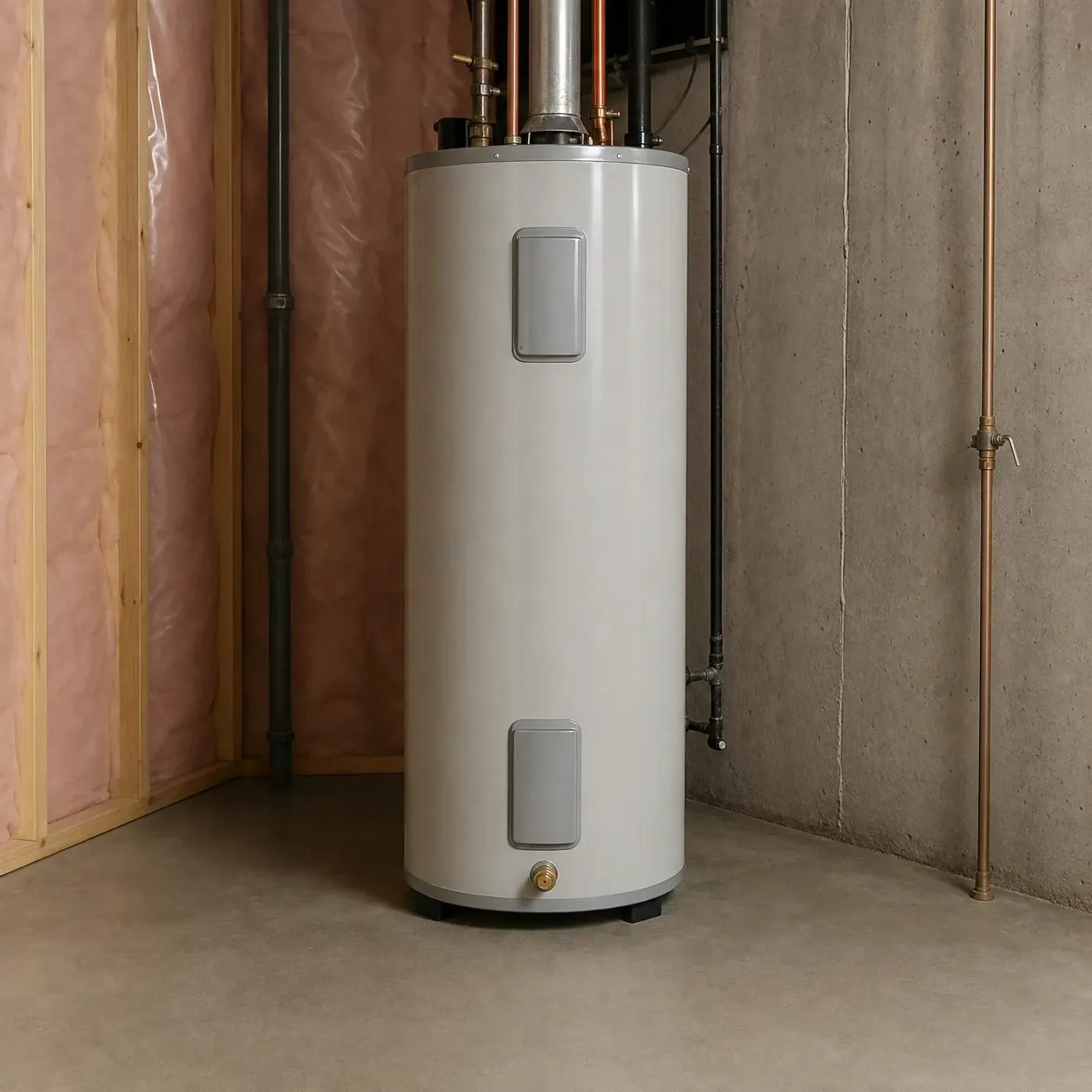
A dial set right doesn't ask for attention, and this tank shows it: panels closed, pipes dry, insulation doing its job behind the wall.
Rust like this on a gas tank often starts at a fitting that's been seeping, and galvanized pipe corrodes long before copper ever would.
78.7% of homes statewide heat with gas
Most houses in Utah run a gas water heater, not an electric one. Gas responds faster to a thermostat change than electric does, so when you turn that dial down to 120 the tank settles into the new setting within a day instead of creeping down slowly.
ACS 2020-2024 5-year B25040
120 degrees is the number for most gas water heaters in Utah, and if yours is set higher, turning it down is a small adjustment with a real payoff on the gas bill. The dial is easy to check and easy to get wrong, and sediment and rust don't wait for a convenient time to show up. A licensed plumber local to Utah who works on these tanks every week knows where this model tends to run hot, what the thermostat is likely reading versus what the gauge shows, and whether rust at a fitting or a slow leak at the relief valve is something to watch or something to fix now. Sending a request connects you with one contractor, not a handful competing for the job, so you're dealing with a single person who already knows the tank before they show up. The dial itself takes a minute. Knowing what else the tank is telling you takes someone who looks at these every day.
Done looking for a water heater pro
Your request goes to one pro, not a list of companies.