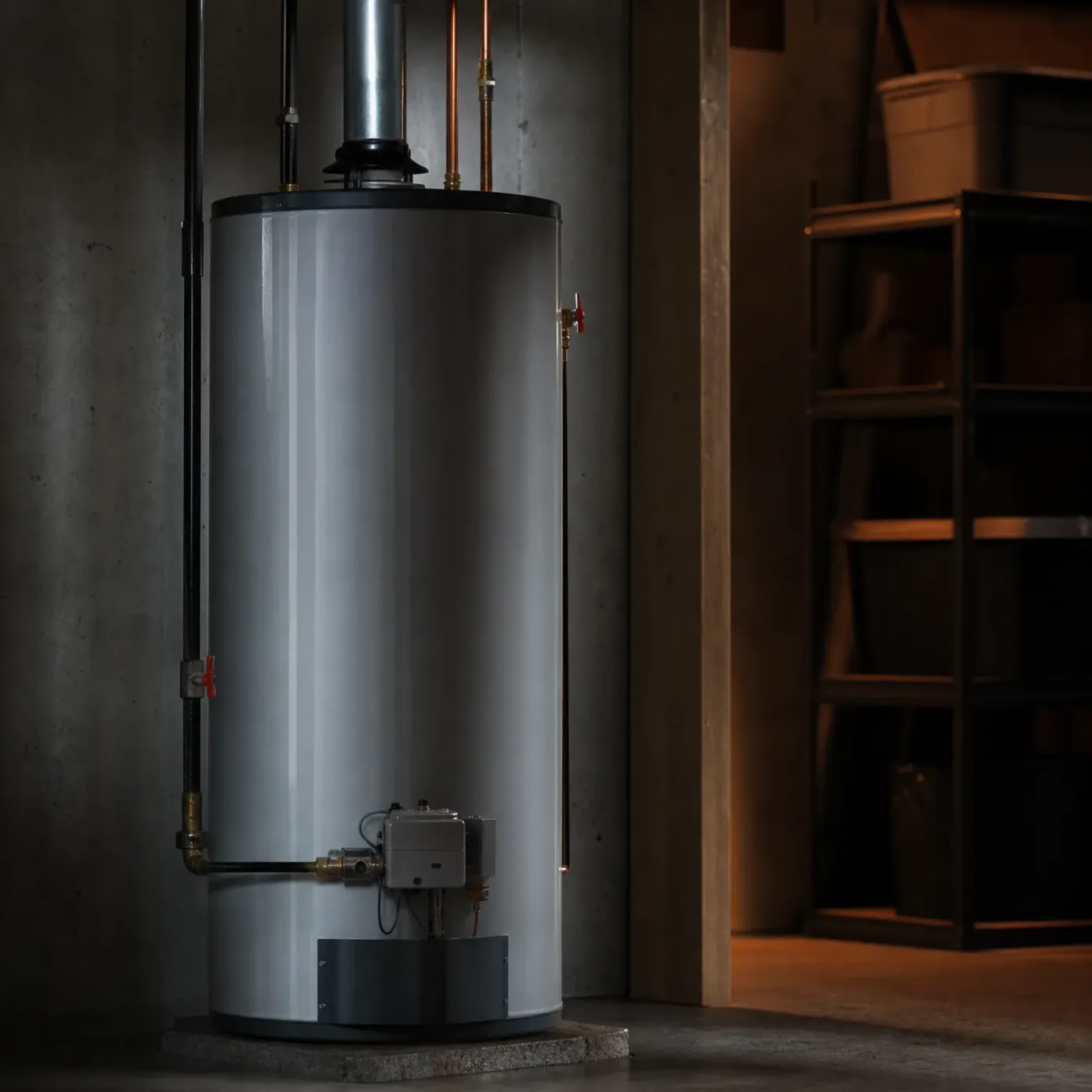
A large gray cylindrical gas water heater with copper and black pipes and a flue stack, standing on a concrete pad against a concrete wall, with a dark metal shelving unit in the background.

Hand off the search today

Why your hot water is lukewarm in Utah

Lukewarm water in a gas water heater usually comes down to one of a few things: a burner not getting enough gas, a thermostat that's lost its setting, or a dip tube that's failed so cold and hot water mix in the tank. This page walks through what causes each one and what it takes to fix it. When you're ready, send your address and a local contractor who works on these units regularly takes it from there.

Hand it off

Lukewarm water almost always means the burner isn't putting out full heat, even though the tank is working to warm the water. On a gas water heater, that usually traces back to the thermostat, the thermocouple, or the burner itself not getting a clean, steady flame. A dirty or misaligned burner will heat water partway and stop short, so what comes out of the tap feels warm, not hot. A dip tube that's cracked is a different problem: it lets incoming cold water mix with the hot water already in the tank, so you're drawing a blend instead of what the thermostat actually heated. Either way, this isn't something that fixes itself, and it tends to get worse, not better, since a burner that's struggling now will keep struggling. Most of these are small parts to replace once someone's looked at the tank directly and seen which one is actually failing.

A smiling man in a dark blue T-shirt sits on a light gray sofa in a living room with a wooden shelf and window behind him, with a laptop edge visible in the foreground.
A bearded man in a plaid flannel shirt sits indoors looking out a window at snow-covered trees, with a steaming mug on the sill and wooden kitchen shelves behind him.

What a bad dip tube does

The dip tube carries cold water down to the bottom of the tank so the burner can heat it. When it cracks or breaks, that cold water dumps out near the top instead, right where the hot water pulls out to your faucet. The tank still fires and still reaches temperature, but every draw mixes in cold at the top. You end up with water that never gets past lukewarm no matter how long you run it, because the burner was never given a fair shot at the water leaving the tank.

What the thermocouple controls

On older gas water heaters with a standing pilot, the thermocouple is what tells the gas valve the pilot is lit and it's safe to keep gas flowing to the burner. If it's worn or sitting out of position, the valve can cut the burner short or let it run weaker than it should. That shows up as water that warms partway and stops. It's a small part, and it's one a local tech who works on these tanks every week usually checks first.

A smiling man in a blue denim shirt over a white tee sits at a light stone kitchen counter with a grey mug and a bowl of oranges and bananas, with pendant lights and shelving behind him.
A smiling bearded man in a grey long-sleeved shirt sits at a kitchen counter with a dark mug, with a dining table, pendant light and glass doors onto greenery behind him.
A bearded man in a dark green knit sweater smiles and looks off to the side while standing at a kitchen counter with a white mug of coffee, with open shelving, a potted tree, and a dining table near large windows behind him.
A man with dark curly hair in a dark green sweater stands smiling and looking to the side in a kitchen with white cabinets, a potted plant, a stone countertop with a ceramic mug, and a dining area with framed art in the background.

Everything in a gas water heater works off what the thermostat tells the burner, and that's where most of this starts. The thermostat only knows the water temperature right where it sits, so if sediment or a weak thermocouple or low gas pressure keeps that spot from reading hot, the burner shuts off thinking the job's done when the rest of the tank is still cold. A burner needs even heat across all its ports to do that job right. Let sediment build up on the tank floor, or let the ports clog with soot, and the flame ends up heating a layer of grime or a patch of metal instead of your water. Low gas pressure makes this worse in a way that's easy to miss, since the burner still lights fine, it just can't push past lukewarm. None of this looks dramatic from the outside. The pilot stays lit, the burner fires, the tank sounds normal. The water just never gets where it should, because something between the flame and the water is getting in the way.

How the tank actually loses heat

  • The thermostat sits on the side of the tank and reads the water right next to it, so it can call for heat even when water a foot away has already cooled.
  • A thermocouple that's gone weak will let the pilot stay lit but shut the gas valve down early, so the burner fires for a shorter time than the tank needs.
  • Sediment that settles on the bottom of the tank sits between the burner and the water, so the flame heats the sediment layer before the heat ever reaches the water above it.
  • The burner needs a steady, clean flame spread evenly across its ports, and a burner that's partly clogged or sooted only heats part of the tank's bottom.
  • Gas pressure that's dropped below what the valve needs will show up first as water that never gets past lukewarm, not as a burner that fails to light at all.
  • A thermostat set correctly but reading wrong because of a loose sensor bulb will shut the burner off well before the tank reaches the set temperature.
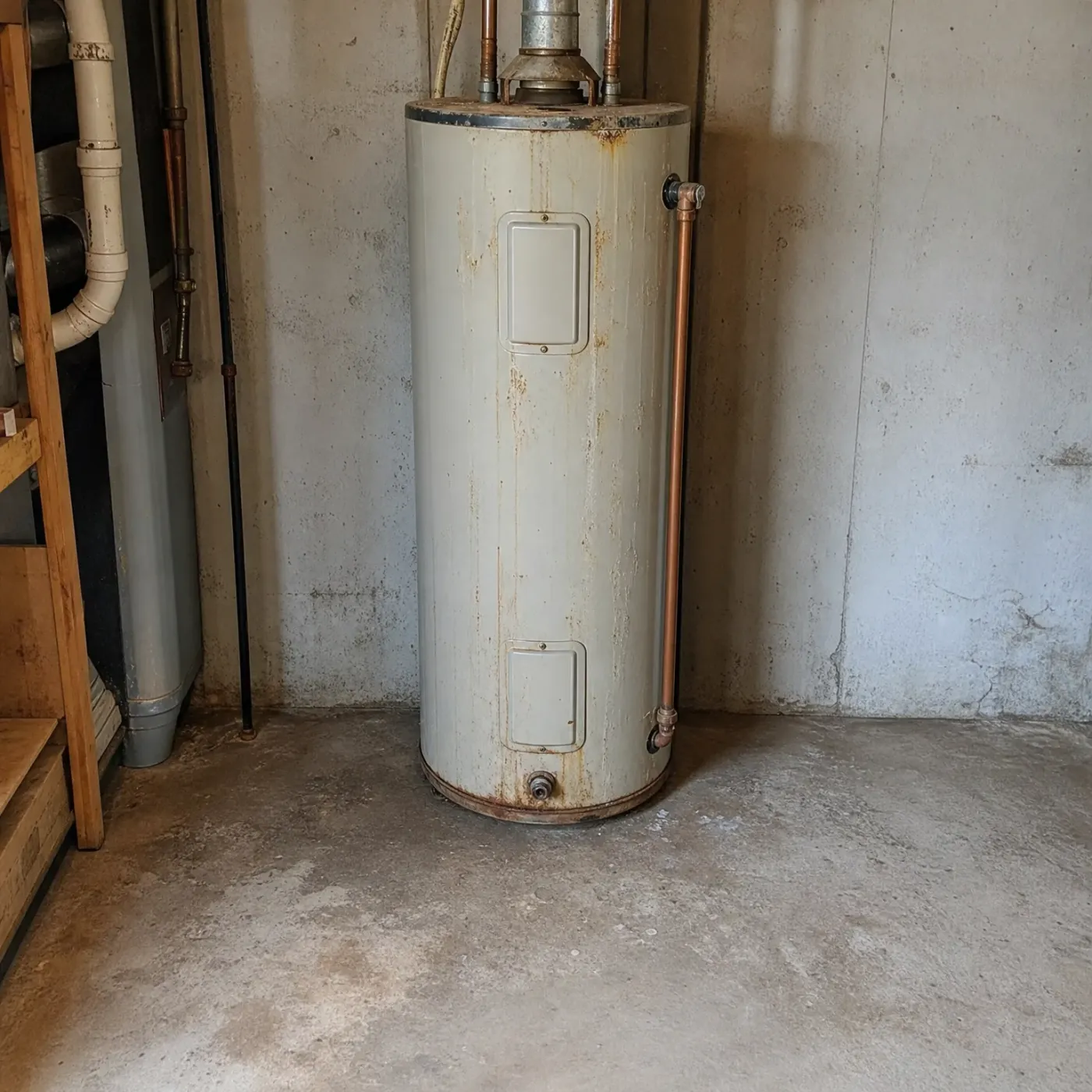
A rusted cream-colored water heater with copper piping and a flue stands in the corner of a concrete-walled basement next to wooden shelving and ductwork.
Before you get your water heater repair
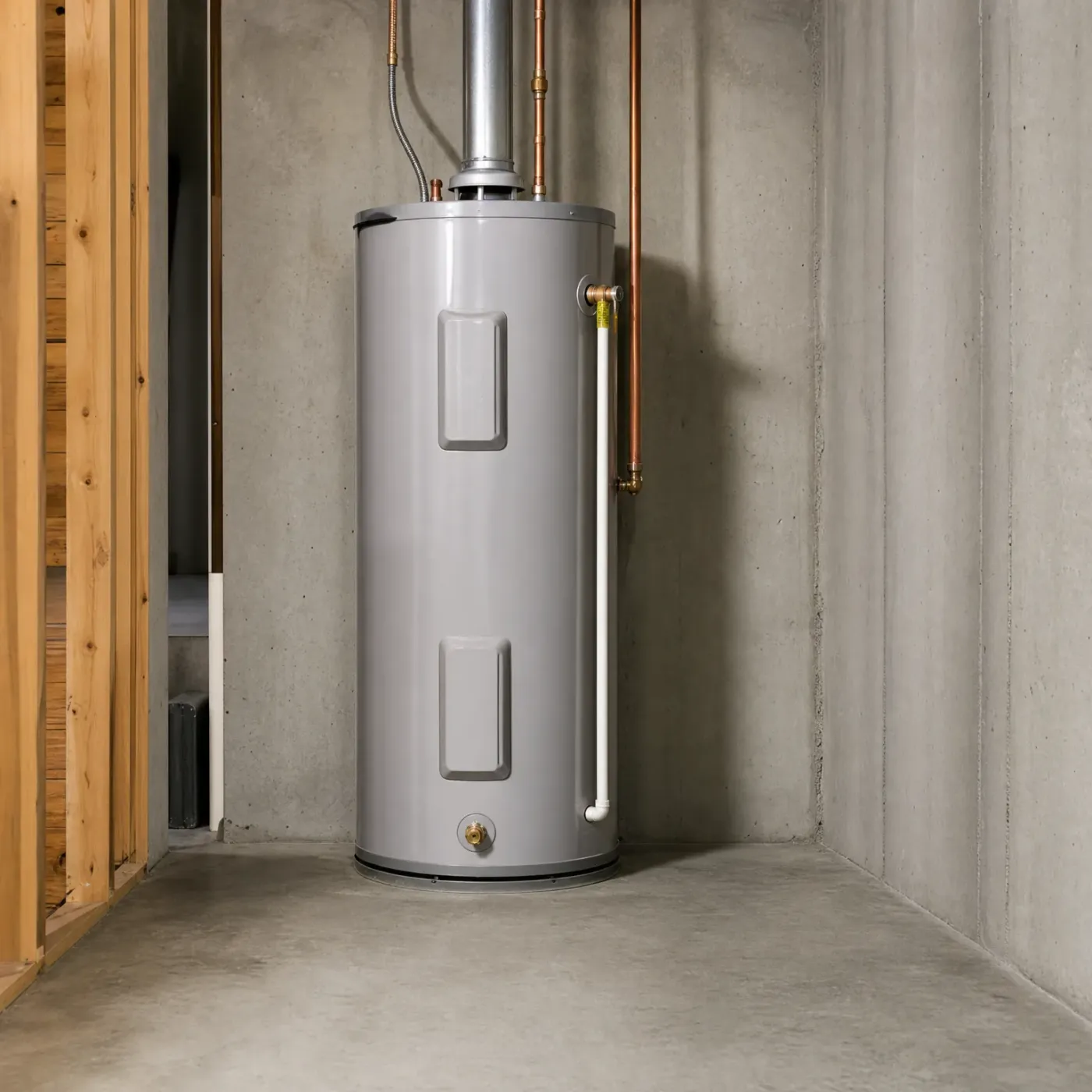
A gray cylindrical water heater standing in a concrete-walled basement corner, with copper and white pipes and a metal flue running up to the ceiling, next to exposed wood framing on the left.
After you get your water heater repair
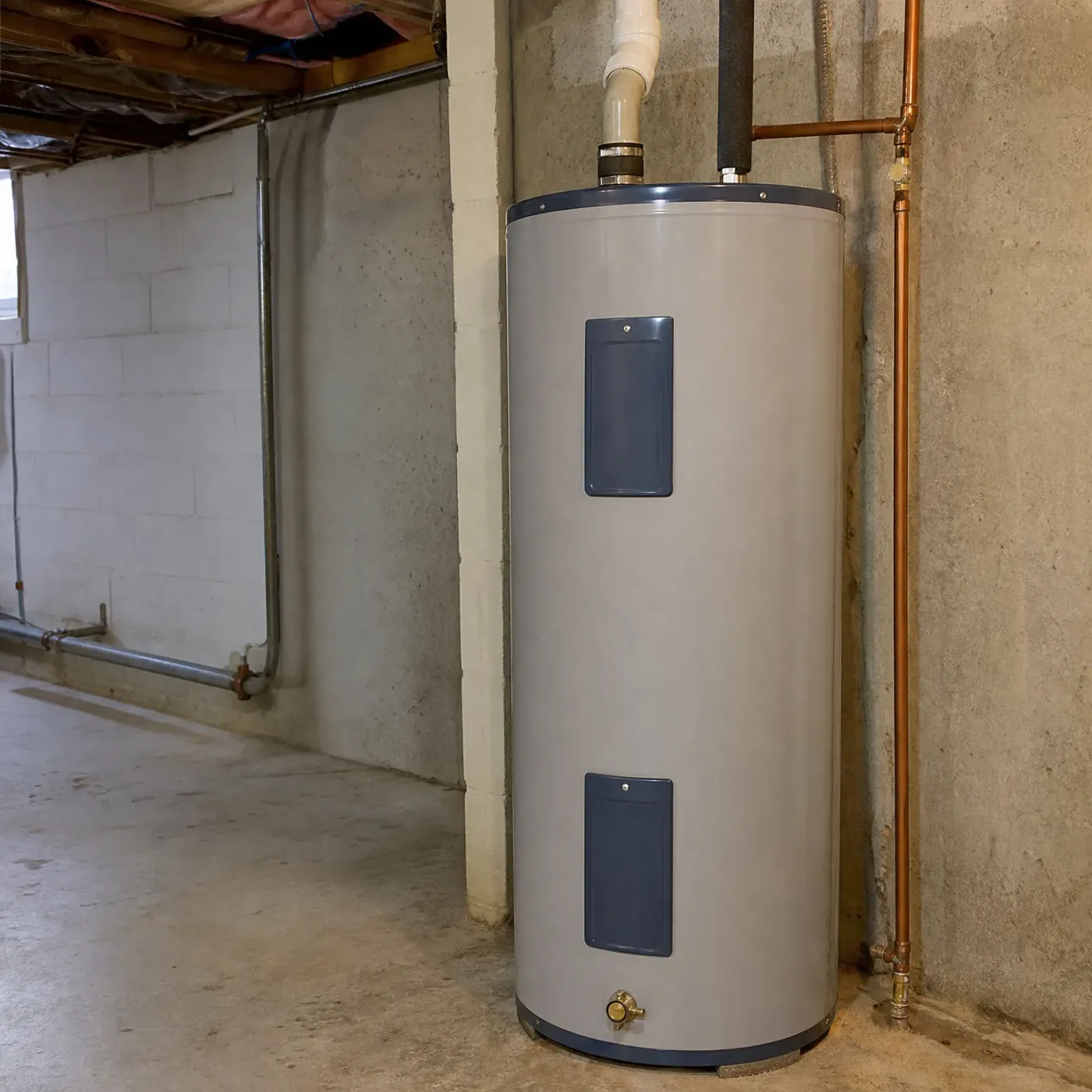
A tall gray cylindrical water heater stands in a basement corner against concrete block walls, with copper and metal pipes running along the wall and a vent pipe at its top.

Stop chasing a water heater pro

The pro who reaches out is licensed in Utah.

Send the request today and stop worrying about who to call.

Hand off the search

You're not committing to anything by asking.

78.7% of homes statewide heat with gas

With close to four out of five Utah homes running on gas, chances are your water heater has a pilot, a thermocouple, and a gas valve rather than heating elements. That means a lukewarm tank is almost always a gas or ignition problem, not an electrical one.

ACS 2020-2024 5-year B25040

Where this leaves you

  • Lukewarm water almost always traces back to the burner, the thermostat, or the dip tube, not the tank itself.
  • A gas water heater that won't hold a steady flame is an ignition problem, and that calls for a licensed hand, not a guess.
  • A local contractor who works on these tanks all year knows which of the three usually turns out to be the culprit.
  • Catching this now, while it's still lukewarm water and not a cold tank or a leak, keeps the repair small.
  • One licensed contractor takes the call, so you're not fielding quotes from four different companies while your water sits lukewarm.
  • The fix is usually a single part: a thermocouple, a thermostat, or a dip tube, once someone's looked at the tank.

Lukewarm water has a short list of causes, and almost every one of them traces back to the burner side of the tank rather than the tank itself. A thermostat that's drifted, a thermocouple that's gone weak, a dip tube that's cracked: these are the usual suspects, and a gas water heater with a steady, properly lit burner doesn't put out lukewarm water. Once you know that, the question stops being "what's wrong with my water heater" and becomes "which of these three is it," and that's a question a licensed contractor answers by looking at the tank, not by guessing over the phone.

Utah homes run mostly on gas, so the contractor who shows up has likely seen this exact combination of parts fail before, this time of year and every other. That's who gets matched to your request: someone local, who works on gas tanks all season, not a call center reading from a script. You get one contractor, not four competing quotes while you're standing in a lukewarm shower deciding who to call back.

Catching it now, while the symptom is still just lukewarm water, is what keeps this a small repair. Wait until the pilot won't stay lit at all, or the tank starts leaking from the strain, and the job gets bigger. Right now it's probably one part. Send the request, and the search for who fixes it stops being your problem to carry.

A modern two-story house with dark siding and stone base at dusk, with lit soffit lights, a path of large rectangular pavers set in dark gravel, planting beds, a lawn, and an orange and blue sunset sky above distant trees and water.

Water Heater Repair

Hand off the water heater problem

Step 1 of 3: Equipment
  • A gray upholstered sofa arm with a cream knit fringed throw sits beside a wooden side table holding a stack of books, a shallow wooden bowl, and a ceramic vase of leafy branches, on a wood floor near a window.
    • Describe your water heater job, and a local pro who handles it gets in touch.
    • Say what's going on with your water heater, and a pro who works on them reaches out.
  • A living room corner with a cream upholstered sofa and cushion beside a wooden side table holding a ceramic vase of olive branches and a small dark bowl, with a framed landscape painting on the gray wall and a linen curtain at the window.
    • Send it once and finding someone is no longer on you.
    • Send the request today and let a water heater pro reach out to you.
  • A wood-framed armchair with a beige cushion and knitted throw sits beside a round wooden side table holding a ceramic mug, with a potted green plant near a window in the corner and a framed picture on the wall.
    • Describe what your water heater is doing once, in one form.
    • Explain the job once and skip repeating it on every call.
  • Interior corner with beadboard wainscoting, a gray cabinet with wood countertop holding a vase of greenery below a window, and a potted leafy plant in a woven basket on a wood floor with a fringed jute rug.
    • Your request stays with one local pro.
    • Your request goes to one pro, not a list of companies.