Profile view of a bearded man wearing a black baseball cap and a dark gray T-shirt against a plain light background.

Why your hot water smells like rotten eggs in Utah

Step 1 of 3: Equipment

That smell is sulfur bacteria living in the water heater tank, reacting with the magnesium or aluminum anode rod inside it. The rod protects the tank from rust by corroding first, and bacteria feed on that reaction and give off hydrogen sulfide gas, which smells like rotten eggs. It shows up most in homes on well water, but it happens on city water too, and it is more common in tanks that sit unused for stretches, since standing water gives the bacteria time to build up. Most homes in Utah heat water with gas, and a gas water heater with this problem needs the same look inside the tank as any other. The smell does not mean the water is unsafe to be near, but it means something inside the tank needs attention, usually the anode rod or a full flush, before it gets worse or starts affecting every tap in the house.

A woman with dark hair in a bun wearing a cream knit sweater sits on a gray sofa in a bright living room, looking off to the side.
A woman wrapped in a knit blanket sits on a gray sofa in a living room, looking toward a bright window with houseplants and an armchair in the background.
A woman in a gray cowl-neck sweater sits on a light sofa with cushions, smiling and looking to the side, with a kitchen and window visible behind her.
A woman with dark hair in a bun, wearing a light linen shirt, sits on a sofa and looks to the side, with a window, houseplants and a kitchen with pendant lights blurred behind her.

Why the Rod Causes the Smell

  • The anode rod is a metal rod bolted into the top of the tank, usually magnesium.
  • Sulfur bacteria thrive in warm water that sits unused for hours, which is normal overnight.
  • Well water and softened water both carry more sulfate, giving the bacteria more to feed on.
  • Gas water heaters often run hotter near the pilot and burner, which can speed up the reaction with the rod.
  • Swapping the magnesium rod for an aluminum or zinc-alloy one often stops the smell without replacing the tank.
  • Raising the thermostat to around 140 degrees for several hours can kill off the bacteria causing the odor.

The anode rod sits bolted into the top of the tank, a metal core wrapped in magnesium or aluminum. Its job is to corrode so the steel tank doesn't. That corrosion is a chemical reaction, and sulfur bacteria that get into the water feed right off it, giving off hydrogen sulfide as a byproduct. That's the rotten egg smell coming out of your taps. The bacteria need two things to take hold: warm water and time sitting still. A tank left overnight, or any stretch where nobody draws hot water for hours, gives them exactly that. It's not a sign anything is broken. If your home runs on well water or has a water softener, there's more sulfate dissolved in the water to begin with, and that gives the bacteria more fuel, so the smell tends to show up stronger and faster in those homes. Gas water heaters add another factor. The burner sits underneath the tank and heats the water nearest the rod hotter than the rest, and that extra heat can push the reaction between the bacteria and the magnesium along faster than in a tank heated more evenly. None of this means the tank is failing. It means the rod protecting it happens to be the exact thing feeding the bacteria that cause the smell, and that's why swapping the rod or changing how hot the water runs are the two things that actually address it.

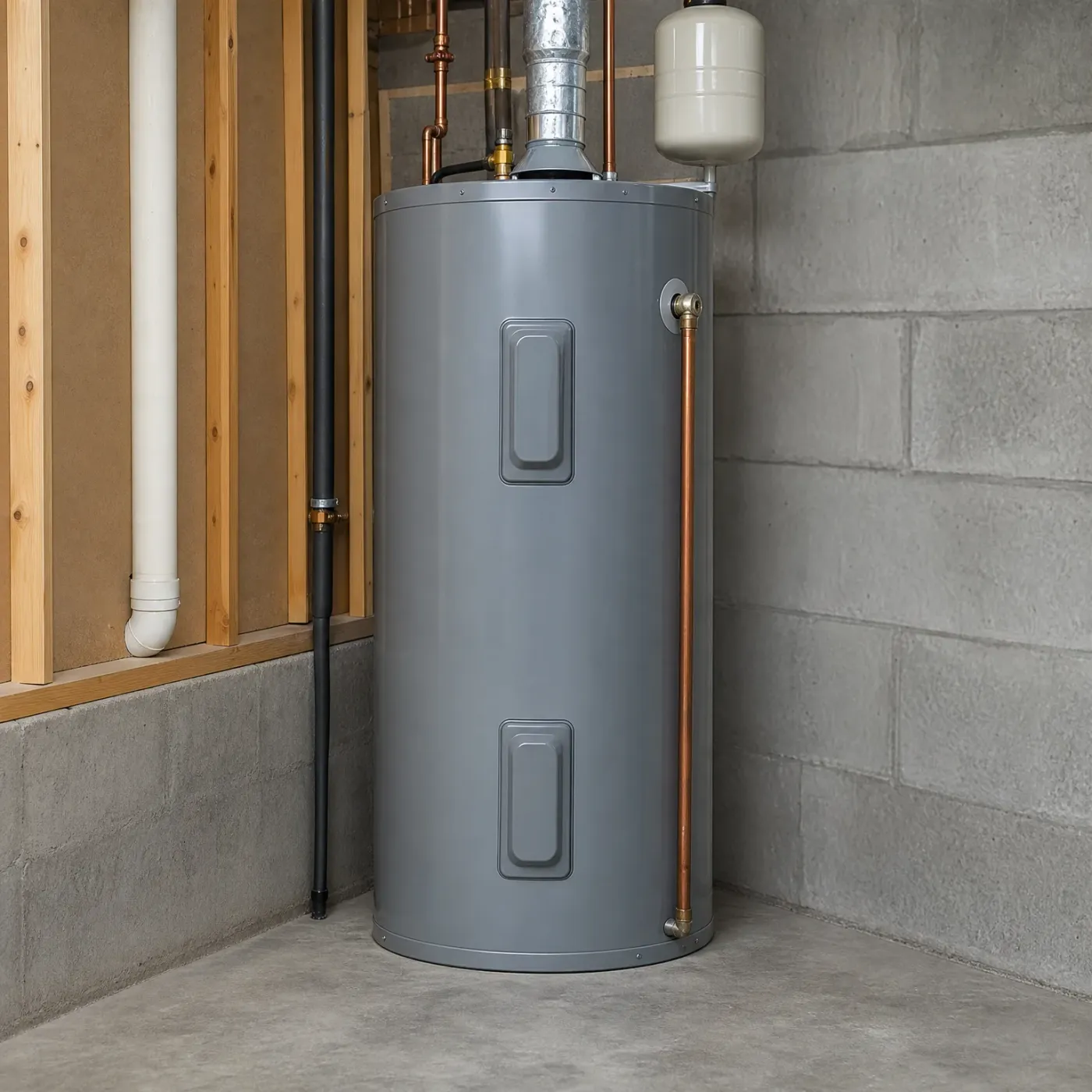
A gray cylindrical water heater with copper piping and an expansion tank stands in a basement corner beside a concrete block wall and exposed wood framing.
A water heater with a magnesium anode rod and no smell problem just means the bacteria reaction hasn't started yet.
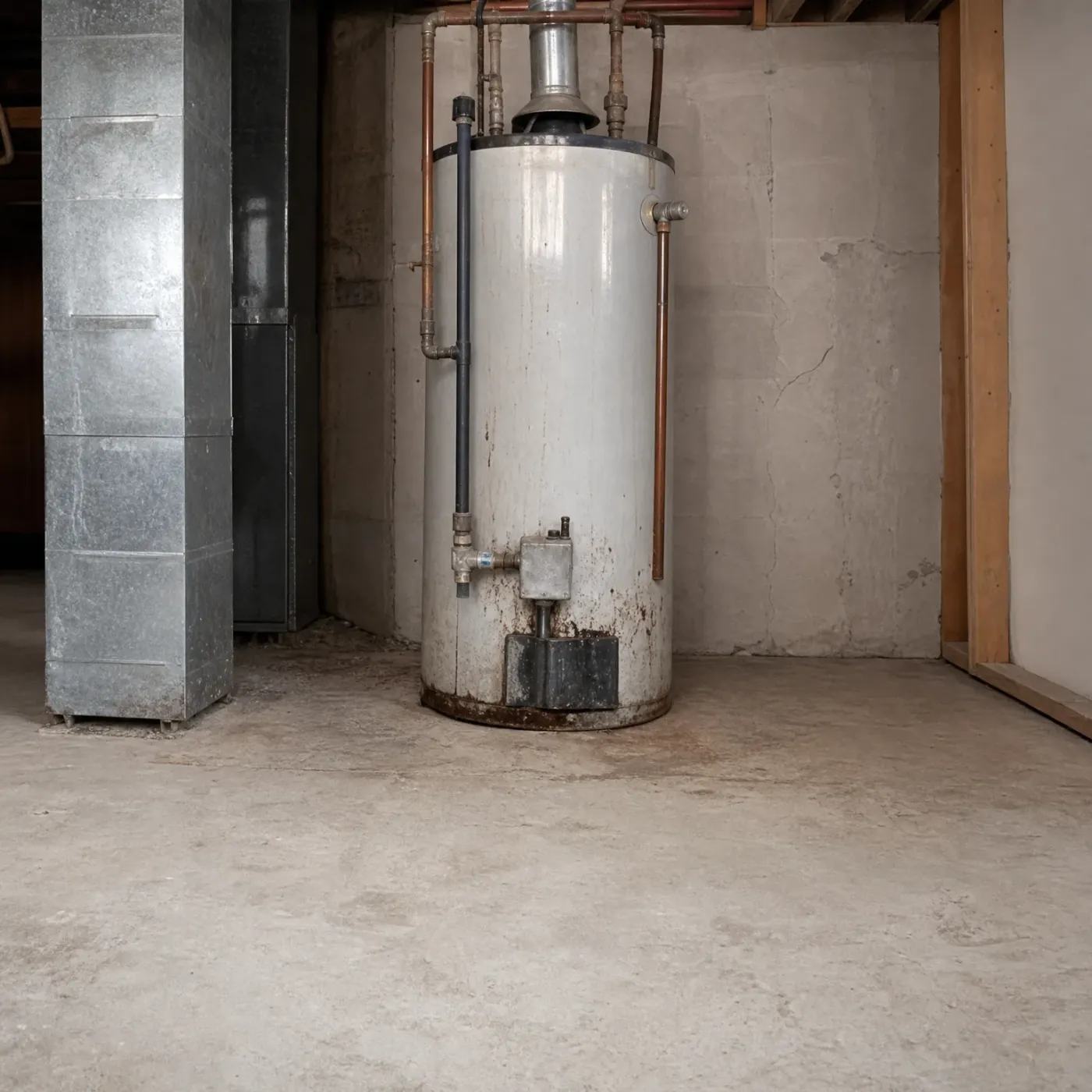
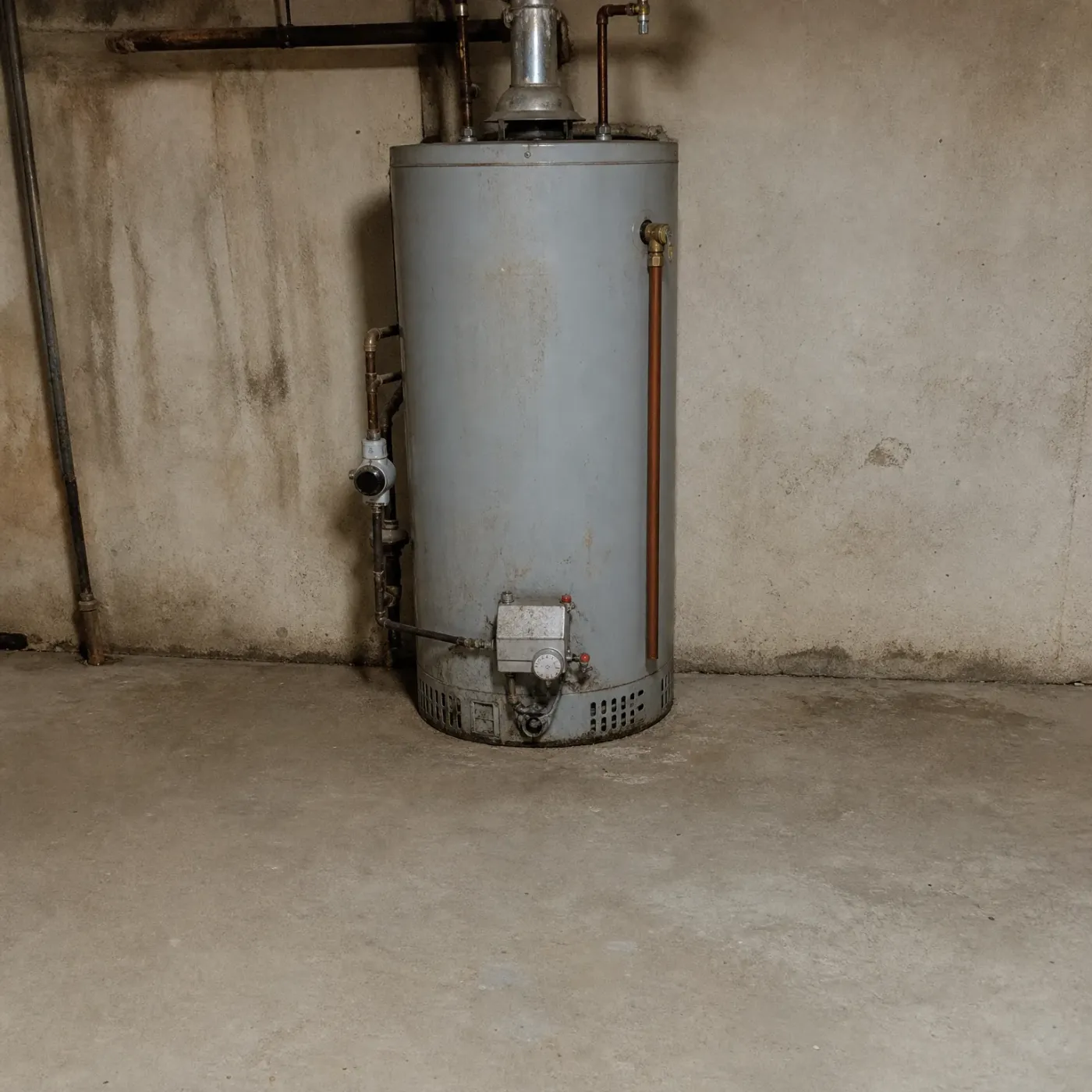
An old rusting cylindrical gas water heater with copper and steel pipes and a flue stands against a concrete basement wall beside metal ductwork on a bare concrete floor.
Heavy rust and mineral buildup like this mean the tank has been fighting that reaction for a long time.
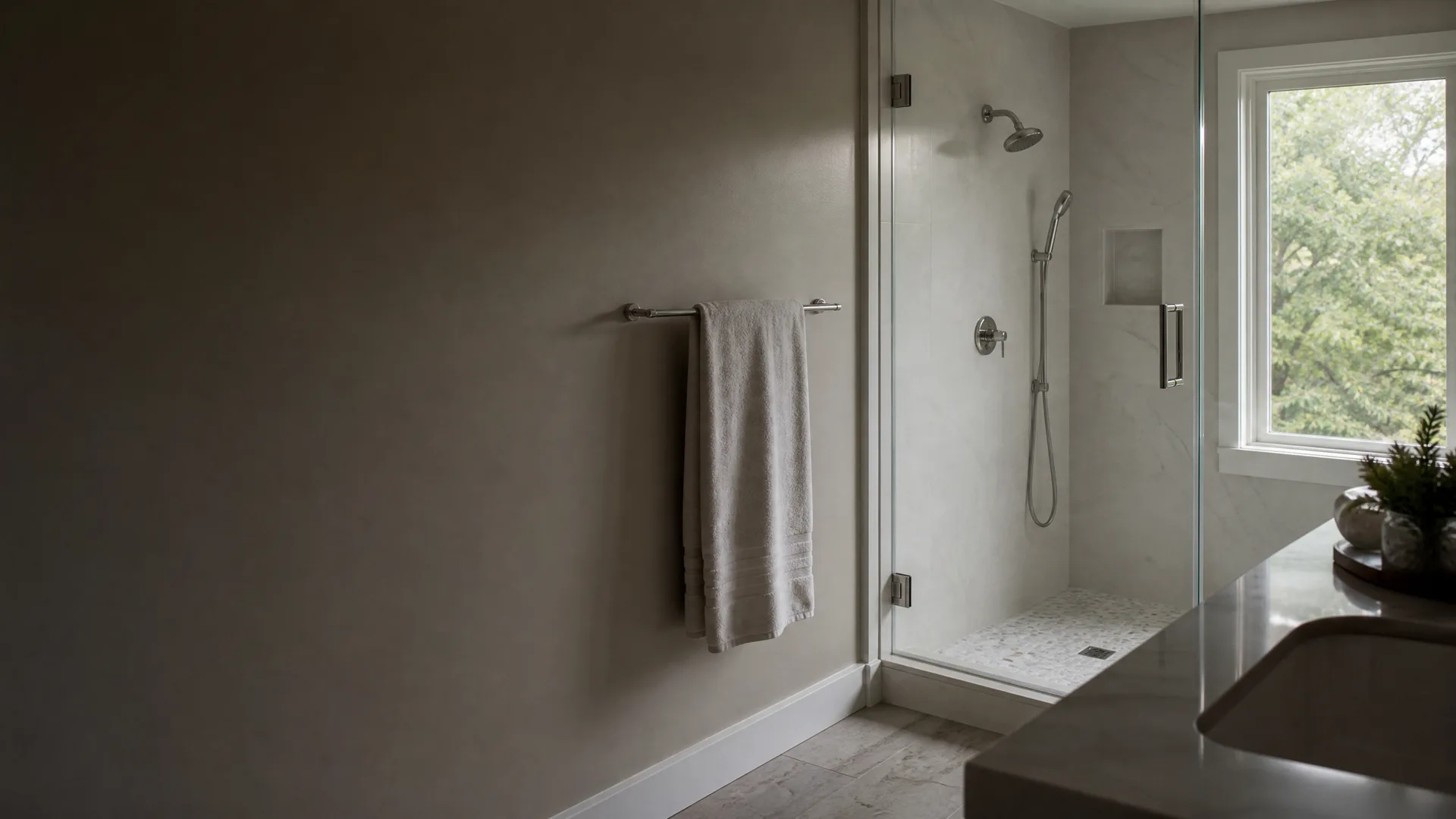
A bathroom with a gray towel hanging on a bar against a taupe wall, a glass-enclosed shower with marble-look tile, showerhead and handheld sprayer, a window showing green trees, and a stone countertop with a sink at right.

You turn the shower on before work and step back to let it heat up. No steam yet. You reach in and the water's warm, not hot, so you nudge the handle further and wait by the towel bar. That's when it hits you, the same smell as last week, like an egg gone bad somewhere in the room. You turn your head toward the vent out of habit, like that'll help. It won't. It's coming up through the water itself. You still get in, because the house still needs you to, but you make a mental note to deal with the water heater before this turns into something you can't just ignore on a weekday morning. Getting a plumber out to look at it means one less thing on your list.

A pro who works on water heaters

That smell doesn't clear up on its own, and most homes in Utah run gas water heaters, so swapping the anode rod or the water isn't a job you do with the power still on and the gas line live. A contractor can test whether it's the rod, the water supply, or the tank itself, and swap the rod for a different metal if that's what's feeding the bacteria. Left alone, the smell tends to come back every time the water sits, which in a house means every morning. Finding someone to look at it usually means calling a few plumbers, explaining the smell each time, waiting on quotes, and figuring out who actually works on water heaters versus who just lists it on a website. That's the part that goes away here. You describe what's happening once, and a contractor who handles this in Utah gets in touch with you instead of the other way around.

Why a new rod fixes it

Swapping the magnesium rod for one made of aluminum and zinc usually stops the smell, because zinc interferes with the bacteria's ability to produce hydrogen sulfide. Some homes need a rod with less magnesium altogether, especially if the water supply already carries a lot of sulfate. A contractor can test the water to find out which rod makes sense for your tank, rather than guessing and replacing it twice.
Why the smell comes back

If the smell returns a few months after a rod swap, the water itself is likely the source, not the tank. Well water and water run through a softener both carry more sulfate, which gives the bacteria more to feed on no matter what the rod is made of. In that case, treating the water supply matters as much as the anode rod does, and a contractor can tell you which one is driving the problem in your home.

An older gray cylindrical gas water heater with copper and steel piping and a flue, standing on a concrete floor against a stained concrete wall.
Before you get your water heater repair
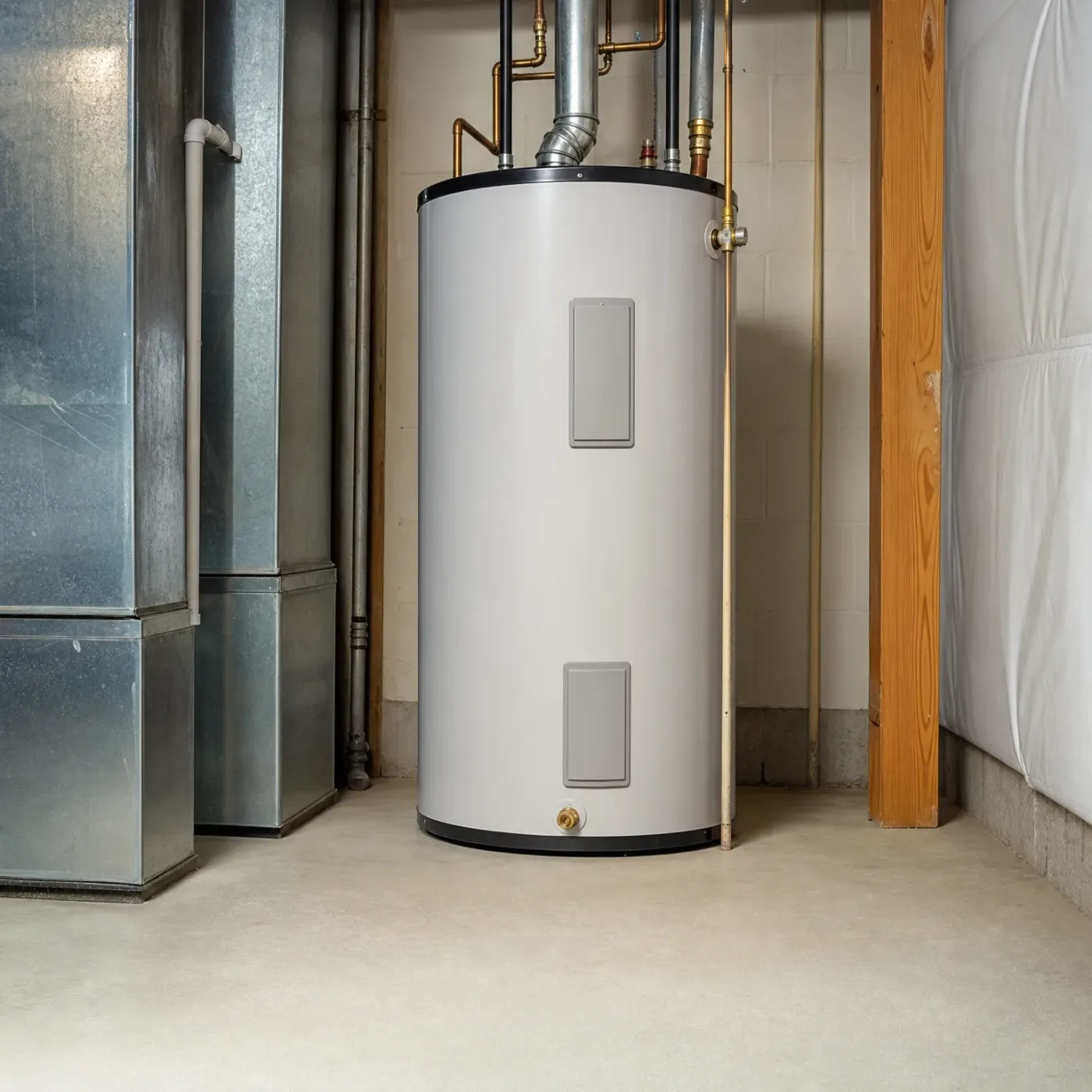
A white cylindrical water heater with two access panels stands on a concrete floor in a basement corner, beside galvanized ductwork, copper and metal pipes, a wooden post, and a concrete block wall.
After you get your water heater repair

Replace the rod yourself

You can find an aluminum-zinc rod at a hardware store, but the tank nipple is often rusted tight, and working near a live gas line and the cold water inlet isn't a job to guess at.

Get a water heater pro

Have a contractor test and replace it

A contractor checks whether it's the rod or the water supply, swaps the rod safely, and you're done calling around for someone who can do it right.

Get a water heater pro
An older woman with gray hair in a bun and glasses, wearing a beige knit sweater, smiles while looking to the side in a warmly lit kitchen, with a loaf of bread on the counter in the foreground and a snowy scene outside the window.
A woman with her hair in a bun holds a sleeping young child against her chest, both wrapped in a textured beige knit blanket on a sofa in a dimly lit room with a lamp, framed picture, and bookshelf behind them.
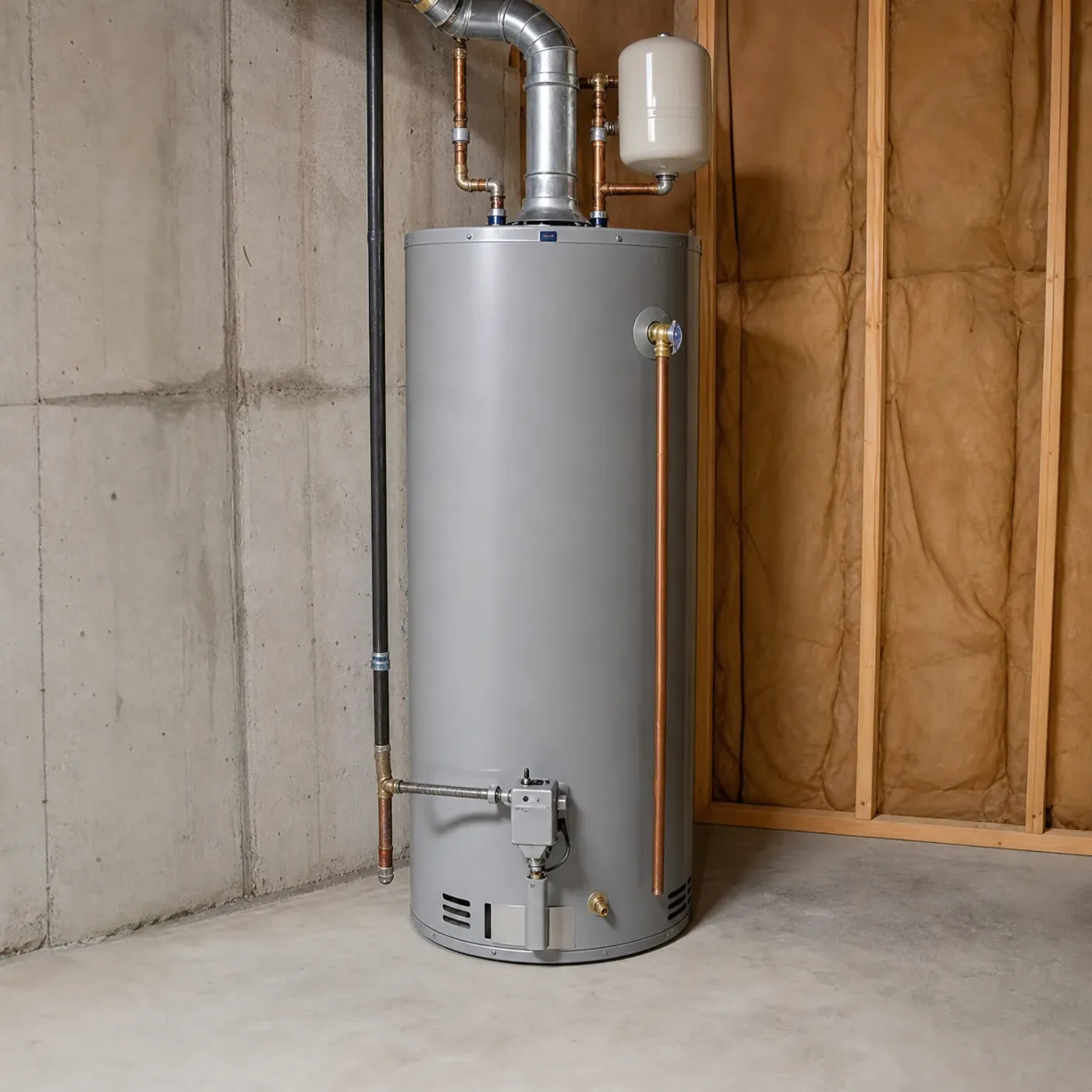
A gray cylindrical gas water heater with copper piping, flue vent, and a small expansion tank stands in a basement corner between a concrete wall and an insulated stud wall.

No smell, tank working as it should

Copper and black iron pipes run clean into the tank, and the flue vent and expansion tank sit where they should. Water comes out clear and odorless because the anode rod inside hasn't started feeding the bacteria yet.

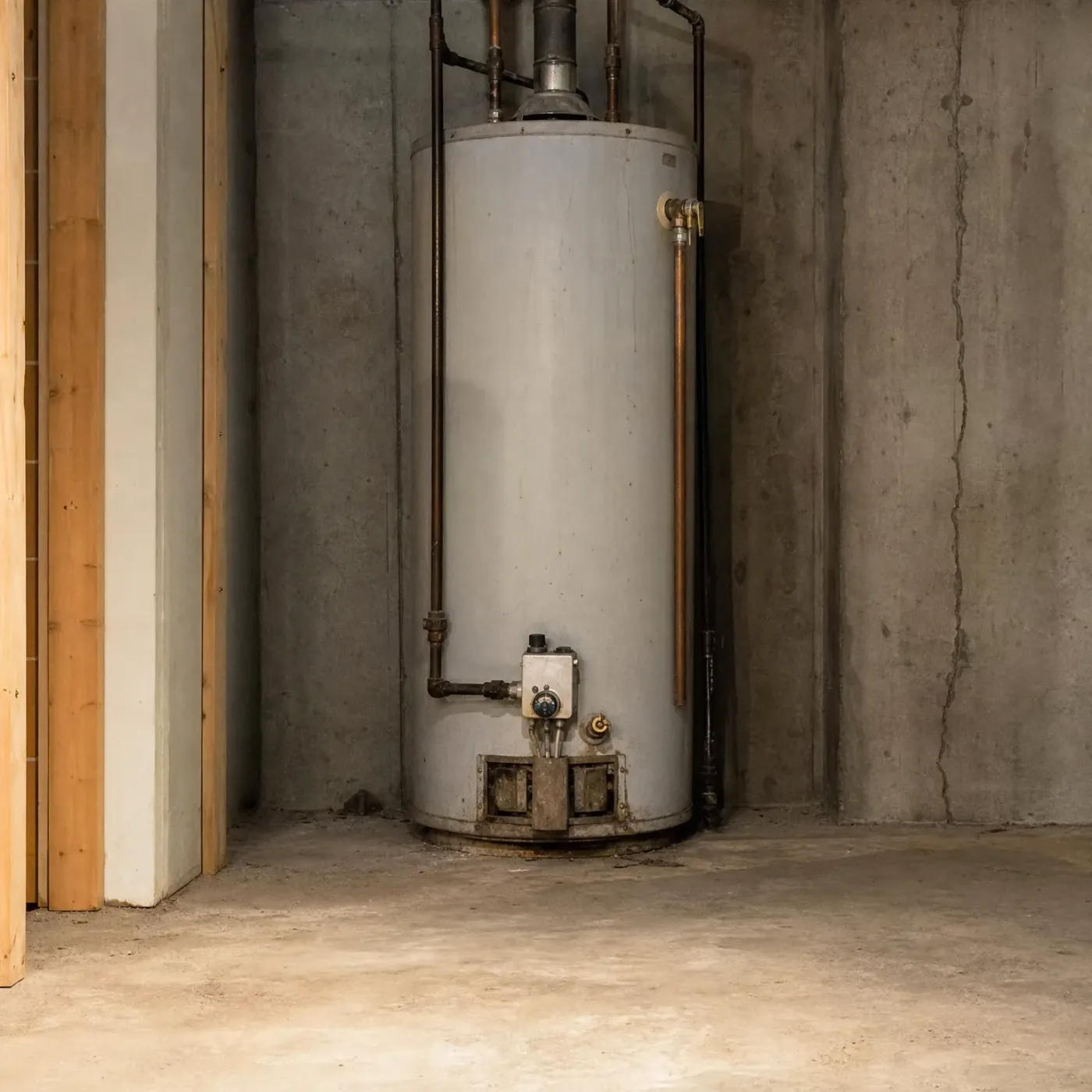
An older gas water heater with copper and black pipes stands in the corner of a bare concrete basement next to a wood-framed partition wall.

Corroded rod, smell coming through the tap

This tank has sat in the corner a long time, and the gas control valve at the base still runs fine, but that doesn't mean the inside is. A magnesium rod breaking down this long is exactly what lets the smell start.

78.7% of homes statewide heat with gas

Almost 8 in 10 homes in Utah run on gas, and yours is probably one of them. Gas water heaters still use an anode rod inside the tank, same as electric ones, so the smell and the fix work the same way regardless of what powers your unit.

ACS 2020-2024 5-year B25040

  1. Sulfate in your water supply feeds bacteria living inside the tank

  2. Bacteria react with the magnesium anode rod bolted to the tank

  3. That reaction gives off hydrogen sulfide gas as a byproduct

  4. Gas builds up in water that sits for hours, usually overnight

A man seen from behind raises his hand to wave at a woman standing in the open front doorway of a single-story house with gray shingle siding, white columns and a gabled porch entry.

The smell has a cause, and it has a fix

The rotten egg smell comes from the anode rod reacting with bacteria in your tank, and it stays until the rod is swapped or the water supply is addressed. It won't fade on its own, and it won't matter whether your water heater runs on gas or electric. The fix is the same either way.

What's left is figuring out which rod your tank needs and getting someone qualified to do the swap without guessing around a live gas line. Instead of calling around to find a contractor who works on water heaters, explaining the smell over and over, and sorting through quotes yourself, you can get matched with a contractor who handles this and have them reach out to you directly.

A living room corner with a light beige sofa holding a textured taupe cushion, a large ceramic vase of olive branches by a window, a framed neutral artwork on the wall, and a dark bowl with stacked books in the foreground.
Sunlight falls across a beige upholstered sofa with a textured woven cushion and a chunky knit throw, beside a dark wood cabinet holding a ceramic vase with green leafy branches, near a white-framed window.
A sunlit corner of a room with a wooden side table holding a ceramic vase of green foliage and a wooden bowl, beside a light upholstered sofa with a knit throw and rust-colored pillow, with window shadows cast on a beige wall.
A sunlit room corner with beige walls, a white-framed window with sheer cream curtain, wood floor with a light rug, and a woven basket holding a knit blanket.
A beige ceramic vase holding a leafy green branch sits on a wooden cabinet in a corner, with sunlight through a sheer curtain casting leaf shadows on the wall.
A grey upholstered sofa with a rust-orange velvet cushion and a textured throw sits beside a window with linen curtains, next to a wooden side table holding a pale ceramic vase of olive branches.

The right pro for this job

Describe what your water heater is doing once, in one form.

Connect with a pro

No charge to send it. You decide if you hire them.