Why your water heater is leaking in Utah

Get the water heater repair search off your mind today.

Let a pro reach out

A leaking water heater usually means the tank itself has rusted through, and once that happens the tank can't be patched, only replaced. Inside the tank, the steel is protected by a glass lining and a sacrificial rod that corrodes in its place. Once that rod is used up, the tank starts rusting from the inside, and the hard water common across Utah speeds that process along. The other common cause is a fitting, valve, or the pressure relief valve working loose or failing, which is often a repair rather than a replacement. Water pooling at the bottom of the tank points to the tank itself. Water coming from a pipe or valve on top points to something fixable. Either way, a leaking tank will not seal itself, and left alone it will keep damaging the floor, the wall, and anything stored nearby. The sooner someone qualified looks at it, the less it costs you in damage beyond the unit itself.

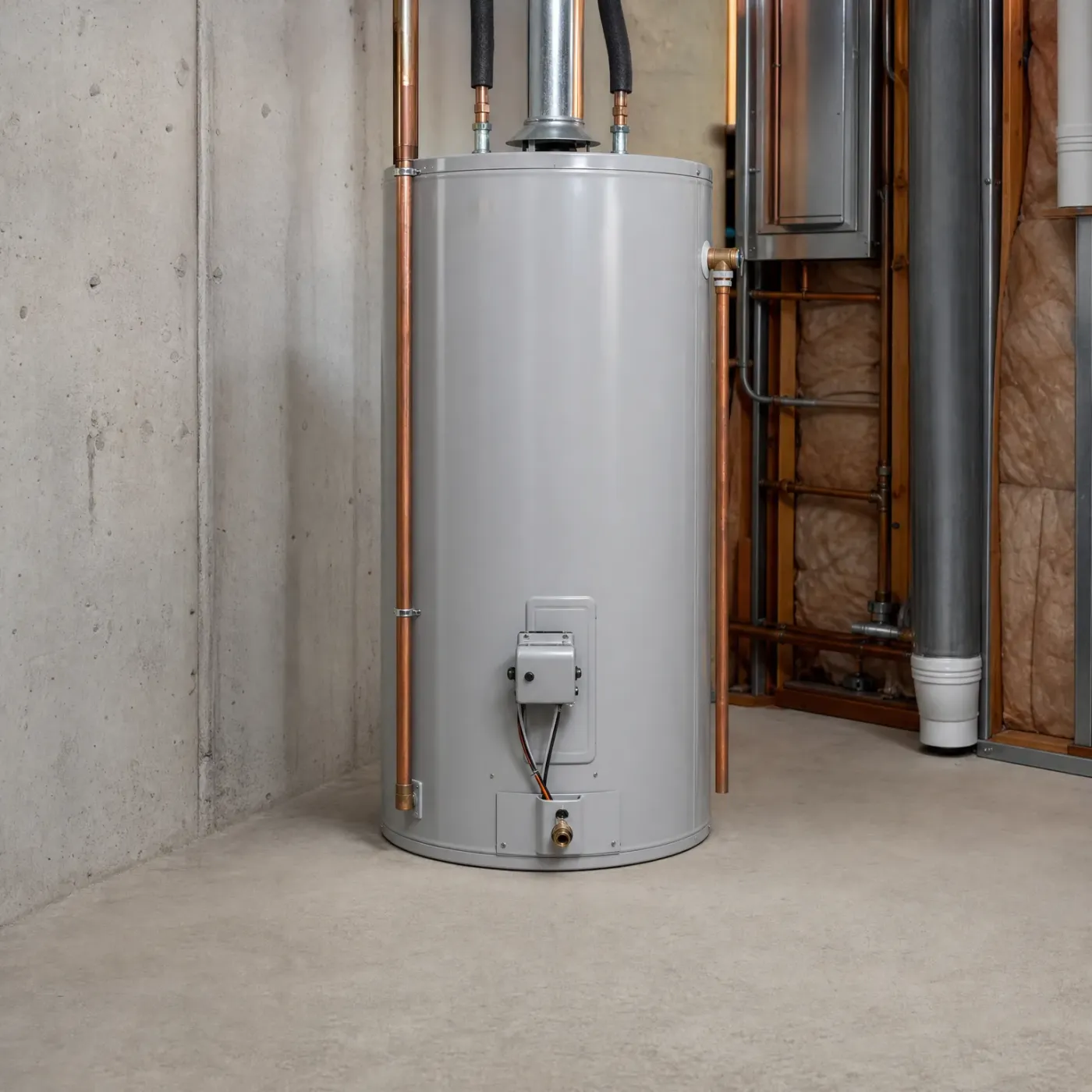
A gray cylindrical water heater stands in a basement corner against a concrete wall, with copper pipes, insulated flex lines, a metal flue, and insulated wall framing with ductwork to the right.

Working as it should

A water heater in good shape stays dry at the base and along every joint. The drain valve and the fittings at the top show no stains, no wet spots, no white mineral crust. The tank holds its shape, with no soft spots or rust bubbling through the metal.

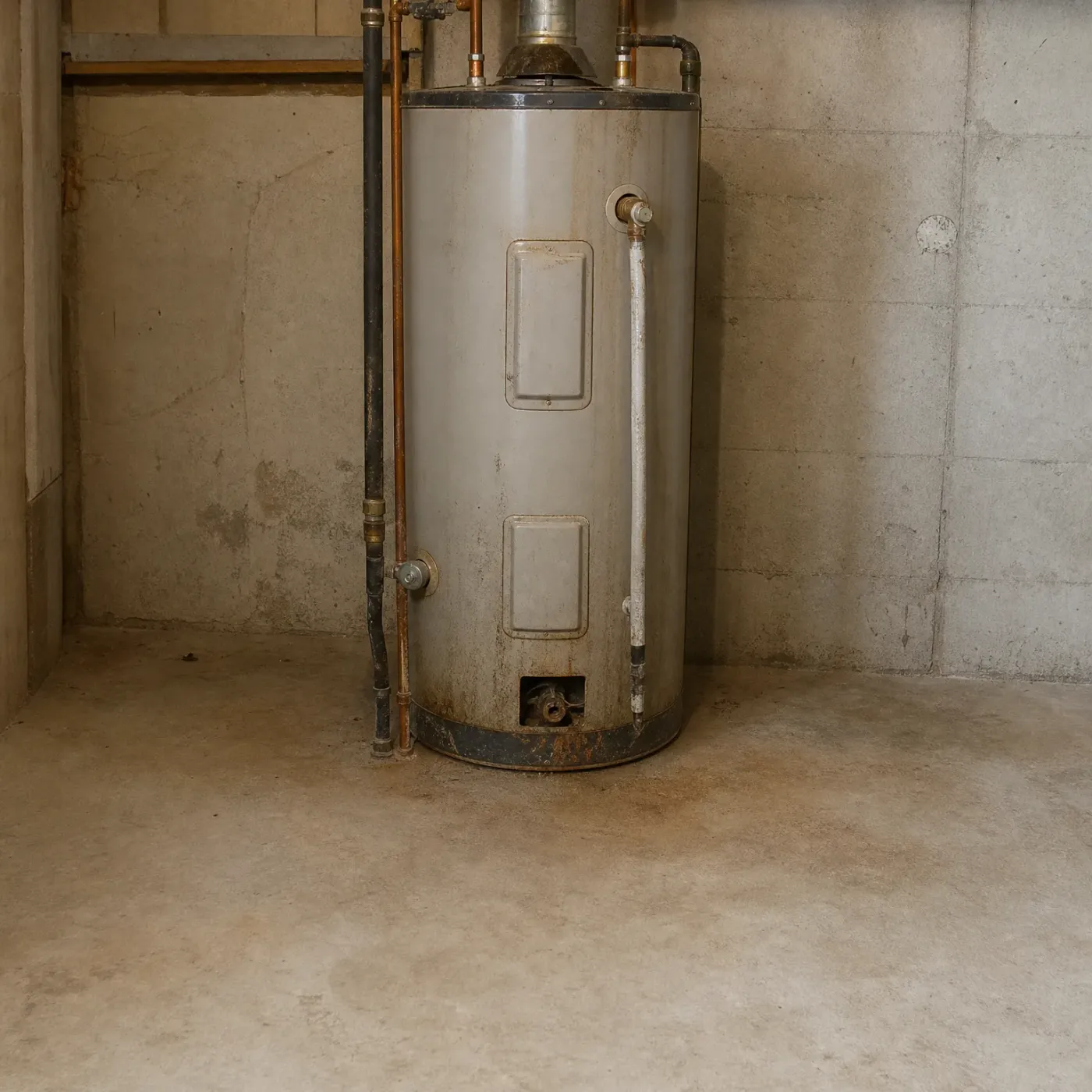
A rusting gas water heater with copper and steel pipes stands against a concrete block wall on a bare concrete floor.

Tank giving out

Rust spreads across the base and up the body, and the metal underneath has already started to give way. Once rust breaks through the steel, water finds its way out around the seams or the fittings. At this point no sealant or patch holds. The tank needs replacing, not repair.

Where does a water heater actually start leaking from first?

You can see water somewhere near the tank, but you're not sure if it's coming from the top, the bottom, or somewhere in between, and that matters for figuring out whether this is a quick fix or a full replacement. Knowing where leaks actually start helps you understand what a contractor is checking first when they look at your unit.

Most leaks start at the bottom of the tank, not the top

The bottom of the tank sits lowest and holds the most sediment, so it's where rust works fastest once the lining wears through. Water pools there first, then finds its way out through a seam or a pinhole in the steel. A puddle under the tank almost always means the tank itself, not a fitting. Leaks at the top are different. Those usually trace back to the cold water inlet, the hot water outlet, or the pipe connections, and a contractor can often tighten or replace those without touching the tank. So where the water shows up first tells you a lot before anyone opens a panel or runs a test.

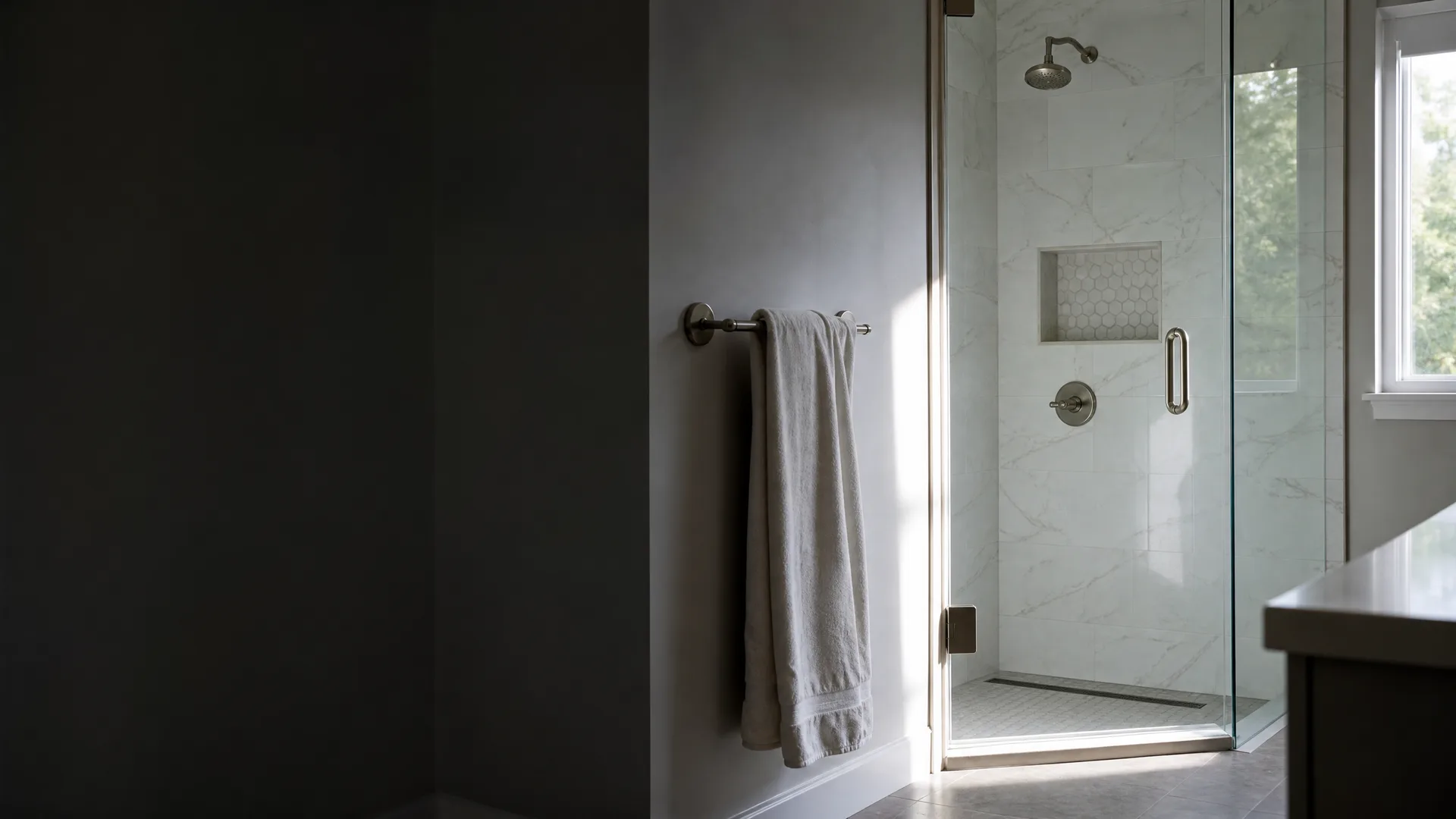
A bathroom with a glass-door shower lined in marble-look tile with a recessed niche and showerhead, a white towel hanging on a wall-mounted bar, and a window with green foliage outside.

You go in to shower before work and the water on the floor gets your sock before you even reach for the shower knob. No steam yet, the stall's still dry inside. You trace it to the front of the tank, down by the drain valve, a thin line of water running toward the drain in the floor. The towel's still hanging where you left it last night. Outside it's already warm, the kind of dry Utah summer morning where you'd normally have the window cracked. You turn the shower off, go find a bucket, and you're not thinking about work anymore. You're thinking about who you can get out here today, and whether you need a new water heater before you need anything else.


Send one request and you're done looking

The pro who reaches out is licensed in Utah.

You only hire the pro if you want to.

Why the hardness in your water matters

Most of Utah's water runs hard, with a heavy mineral load that settles out as the water heats. That mineral settles to the bottom of the tank as sediment, and over time it builds into a layer that sits between the burner and the water above it. The steel at the bottom has to work through that layer to pass heat along, and it runs hotter doing it. Hotter steel corrodes faster, and once the glass lining over it wears through at a weak spot, the rod inside can't keep up protecting that one spot on its own. Tanks in hard water areas tend to show bottom leaks earlier than the same tank would in soft water, because the sediment layer is doing the damage from day one, quietly, long before anyone sees a drop on the floor.

What a gas burner adds to the picture

Gas water heaters heat from a burner underneath the tank, not from an element inside the water like an electric one does. That means the bottom of a gas tank runs hotter than the rest of it, right where sediment collects. The seam around the drain valve and the welded joint at the base sit in that same hot zone, so they're often where a leak shows up first on a gas unit. If your water heater runs on gas, as most do here, a drip at the bottom isn't just about the tank wearing out. It's about that spot taking more heat, year after year, than any other part of it.

A gray-haired man in a dark long-sleeve shirt sits on a gray sofa in a living room, looking toward a sunlit window with sheer curtains.
A gray-haired man in a dark green sweatshirt sits on a sofa in a living room, looking toward a bright window, with a houseplant, lamp, fireplace and framed art behind him.
A gray-haired bearded man in a dark green collared sweater sits on a sofa in a living room with a window, houseplant, floor lamp and bookshelves, looking off to the side.
A gray-haired man in a dark green sweater sits on a sofa in a sunlit living room, looking off to the side, with a framed landscape painting, dining table and shelving behind him.
  1. Sediment builds up on the tank bottom and hardens over time

  2. Hardened sediment traps heat against the steel above it

  3. That spot overheats and the glass lining cracks first

  4. Bare steel underneath starts to rust once exposed

78.7% of homes statewide heat with gas

Most houses in Utah heat water with a gas burner under the tank, not an electric element inside it. That flame sits right at the bottom seam, the spot already under the most strain from sediment and rust. When that seam finally gives out, the leak shows up fast.

ACS 2020-2024 5-year B25040

A gray cylindrical gas water heater with copper and black pipes stands in the corner of a basement with concrete block walls and a bare concrete floor.
Before you get your water heater repair
A gray cylindrical water heater standing in a basement corner against a concrete wall, with copper and black pipes, a metal flue, and ductwork nearby, next to wood framing on the right.
After you get your water heater repair
A gray cylindrical water heater standing on a concrete floor in a basement corner, with copper pipes and a metal duct running overhead along bare concrete walls.

Still doing its job

This one sits dry at the base, with copper lines and the vent running clean out the top. No streaks down the side, no puddle by the drain valve. A tank in this shape just needs the sediment checked now and then.

A white cylindrical water heater with rust stains and two access panels stands in a basement corner between a painted concrete block wall and a bare concrete wall, with metal pipes running up and alongside it on a concrete floor.

Past the point of patching

Rust has worked across the whole tank, not just a spot near the bottom. Pipe connections corrode along with the steel underneath them. A tank rusted like this won't hold, and a plumber looking at it will tell you it's a replacement, not a repair.

A woman with shoulder-length dark brown hair in a cream knit cardigan sits in an upholstered armchair beside a window, looking off to the side, with a white bookshelf and potted plant blurred behind her.
A woman with dark hair in a bun sits wrapped in a chunky knit blanket on a couch with a child resting his head on her shoulder, eyes closed, beside a lit lamp and bookshelf indoors.

Where That Leaves You

  • A leak at the tank almost always means rust has worked through the steel and the tank needs replacing, not patching.
  • A leak at a fitting, valve, or connection is often a repair a licensed plumber can make without touching the tank.
  • Utah's hard water speeds up the sediment buildup that wears through the lining and sets off rust underneath.
  • The gas burner under the tank puts the bottom seam under the most strain, which is why so many leaks start there.
  • A local plumber who services these tanks all year knows which failure point to check first based on where the water shows up.
  • Sending one request puts the job in front of a single licensed contractor in your area instead of a pile of calls to sort through.

Where the water shows up tells you most of what you need to know. A fitting, a valve, a connection: a licensed plumber can usually get in there and fix it without touching the tank itself. Water coming from the tank body is a different matter. Once steel has rusted through, there's no sealing it back up. The tank gets replaced.

Utah's hard water plays a part in how fast that happens. The minerals in it settle into the tank as sediment, and that sediment is what wears through the glass lining and lets rust start on bare steel. Add a gas burner sitting right under the tank, putting heat and strain on the bottom seam, and you've got the spot where leaks show up most often.

None of that is something you need to diagnose yourself. A plumber who works on these tanks all year, in homes with the same hard water and the same gas setup as yours, knows where to look first and what the leak is probably telling him before he opens anything up. That's the kind of local knowledge that turns a stressful find into a quick, clear answer: repair the fitting, or replace the tank.

Sending a request through this page puts you in front of one licensed contractor near you, not a string of callbacks from companies you'll have to sort through yourself. Once it's sent, finding the right person for the job isn't something you have to keep managing.

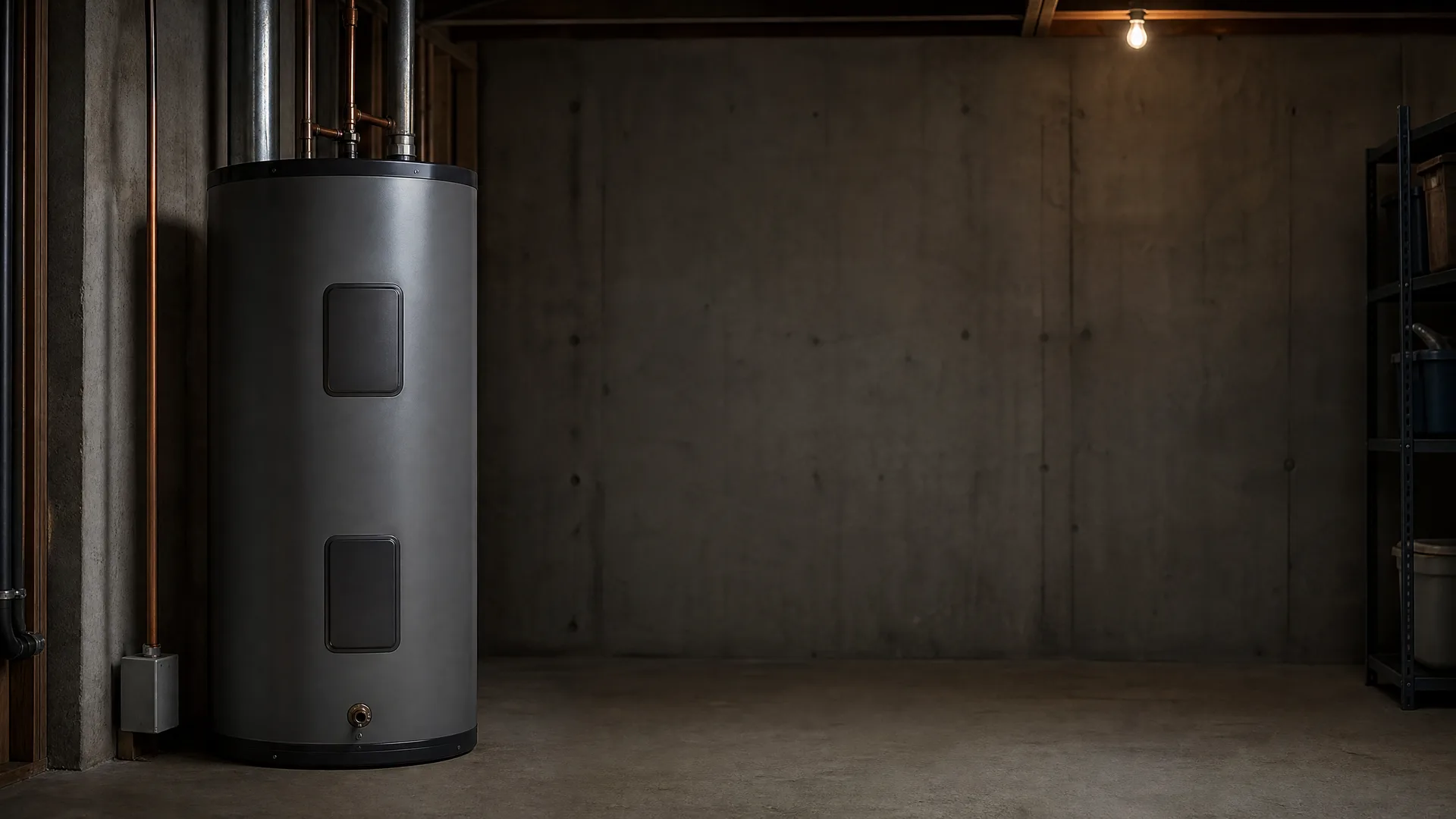
A gray cylindrical water heater with copper pipes stands against a concrete wall in a dim basement, with a bare hanging light bulb and a metal shelving unit at right.

Finding a pro stops being your job

Only one pro gets your request, so you hear from one company.

Step 1 of 3: Equipment